Sculpting & Ceramics Art
Sculptures
In my sculptural work, I am drawn to animal and human figures that feel alive and expressive. Working mostly with brown and white clay, I explore gesture, posture, and surface texture—from small studies to large, body-sized pieces. These sculptures became a way for me to observe how form, weight, and emotion can all exist together in three dimensions.
Ceramics Sculptures
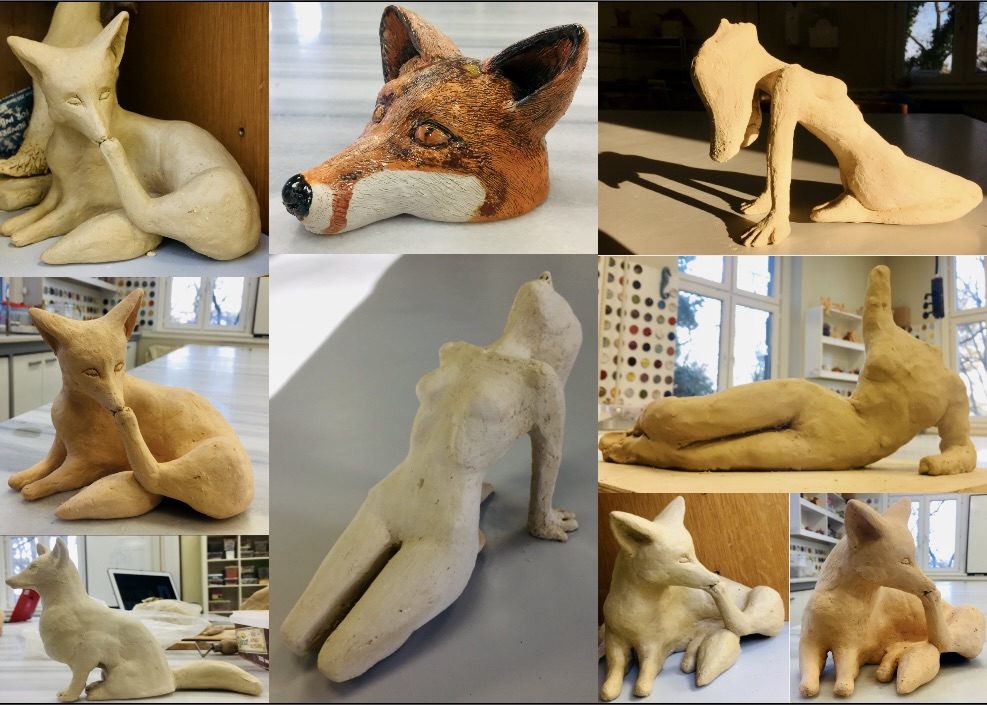
A collection of animal and human figure sculptures created throughout my high school years.
This group of ceramic sculptures shows the range of figures I explored in the studio—from small animal studies to larger human forms. Working mainly with brown clay, I experimented with balance, proportion, and surface details, trying to capture personality and poses. Together, these pieces trace my growth in understanding how clay can be pushed, carved, and refined into expressive characters.
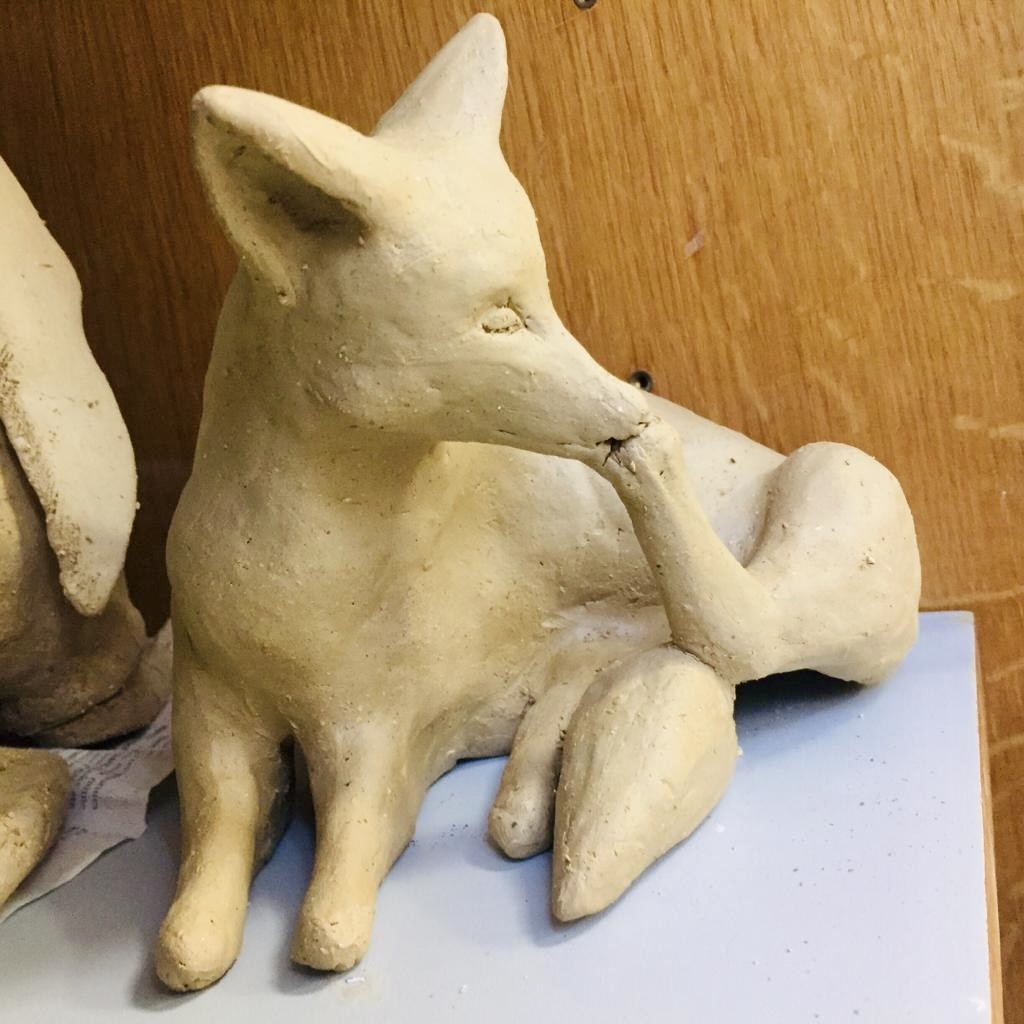
Greenware Fox Figure – Profile View
A profile view of the fox sculpture in brown clay, focusing on character and posture.
This fox figure is around 25cm tall and was built as a solid form at first, then carefully hollowed from the bottom to reduce weight and improve firing. I wanted the fox to feel alert as it cleans its paw, so I paid attention to the tilt of the head, the curve of the tail, and the tension in the legs. The piece was a study in capturing gesture and personality without relying on extreme detail.
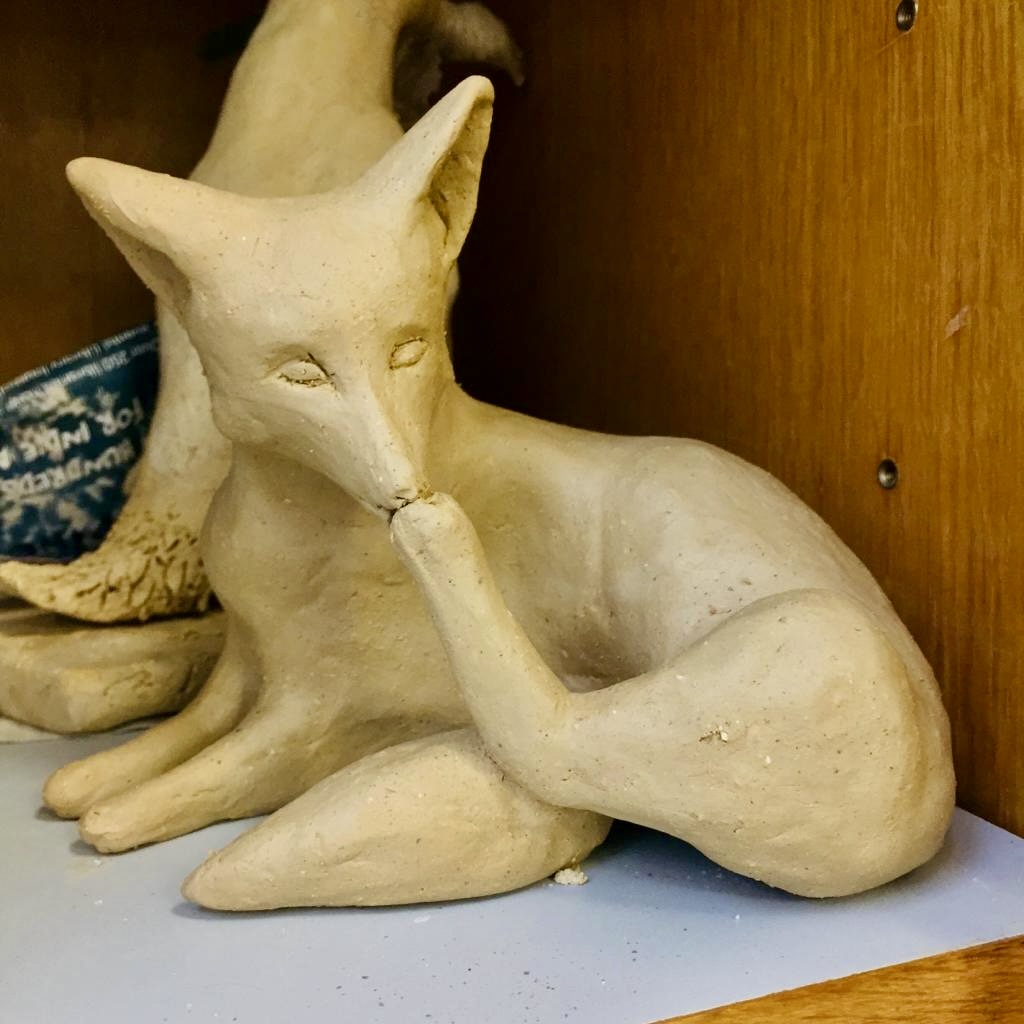
Greenware Fox Figure – Front View
A front view of the brown clay fox sculpture, emphasizing silhouette and balance.
This angle of the fox figure highlights the silhouette and overall balance of the sculpture. I focused on the line of the back and tail, making sure the form felt stable but still light and ready to move. Seeing the piece from this view helped me evaluate proportions and how the shapes flow together in space.
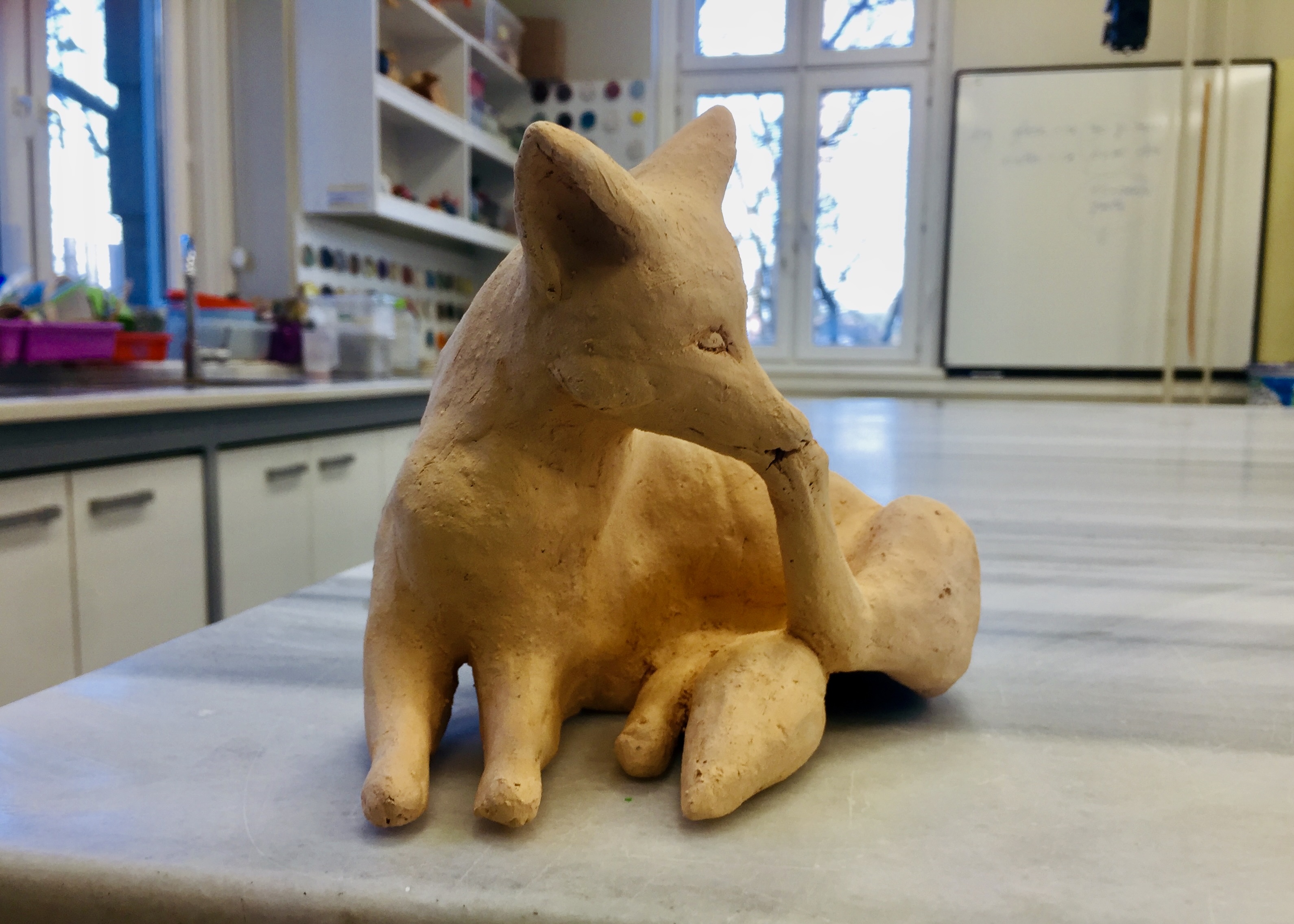
Bisque Fired Fox Figure – Profile View
A profile view of the bisque-fired fox, focusing on curves and volume.
This profile emphasizes the curves of the tail, back, and chest. I wanted the fox to feel soft and rounded but still alert, so I carved and smoothed the surfaces to guide how light would travel across the form once glazed.
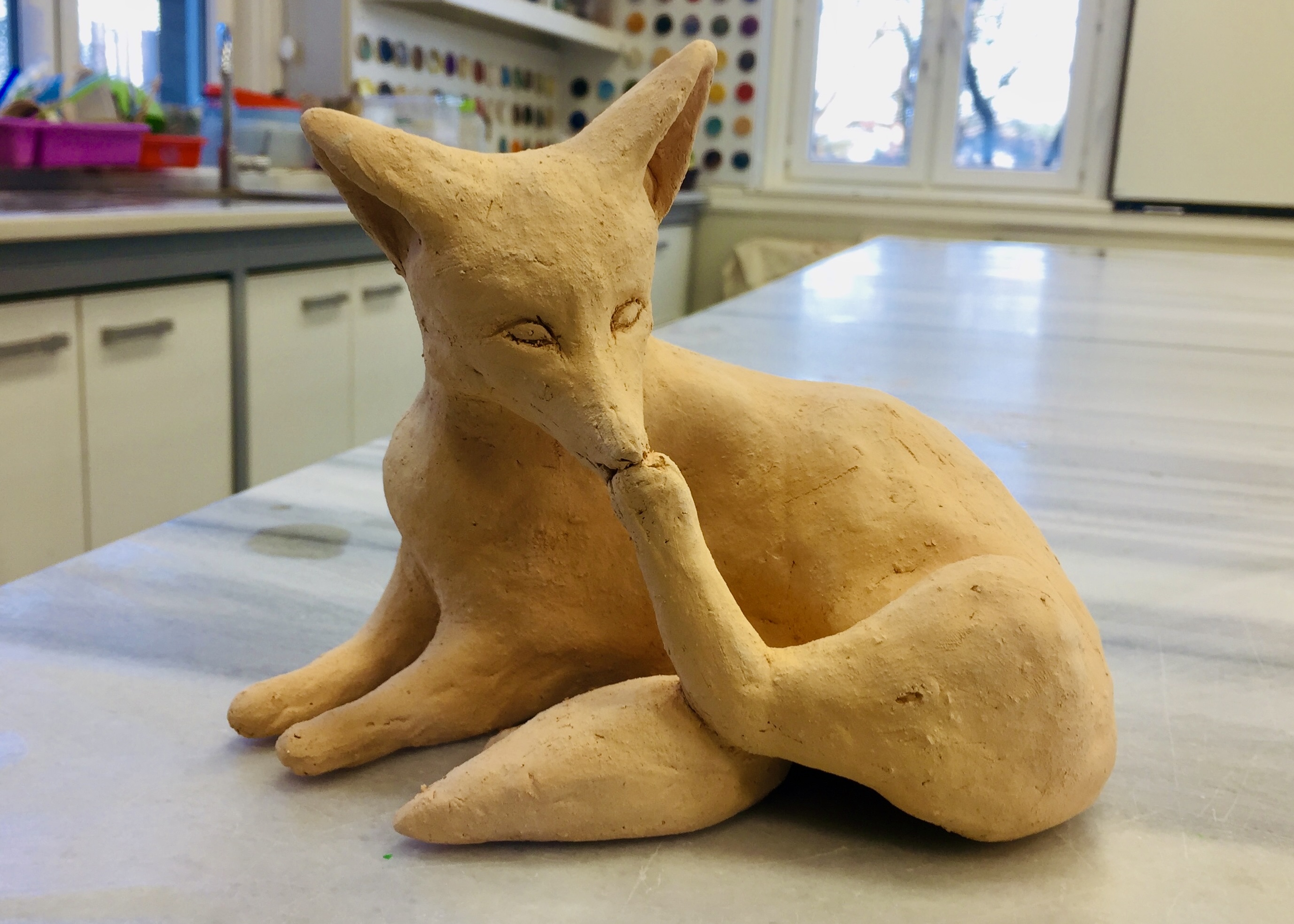
Bisque Fired Fox Figure – Front View
The front view of the fox sculpture at the bisque-fired stage before glazing.
At the bisque-fired stage, the fox figure reveals its structure without the distraction of glaze. This in–between step let me check for cracks, refine small areas, and think about what kind of surface and color would best support the character of the piece.
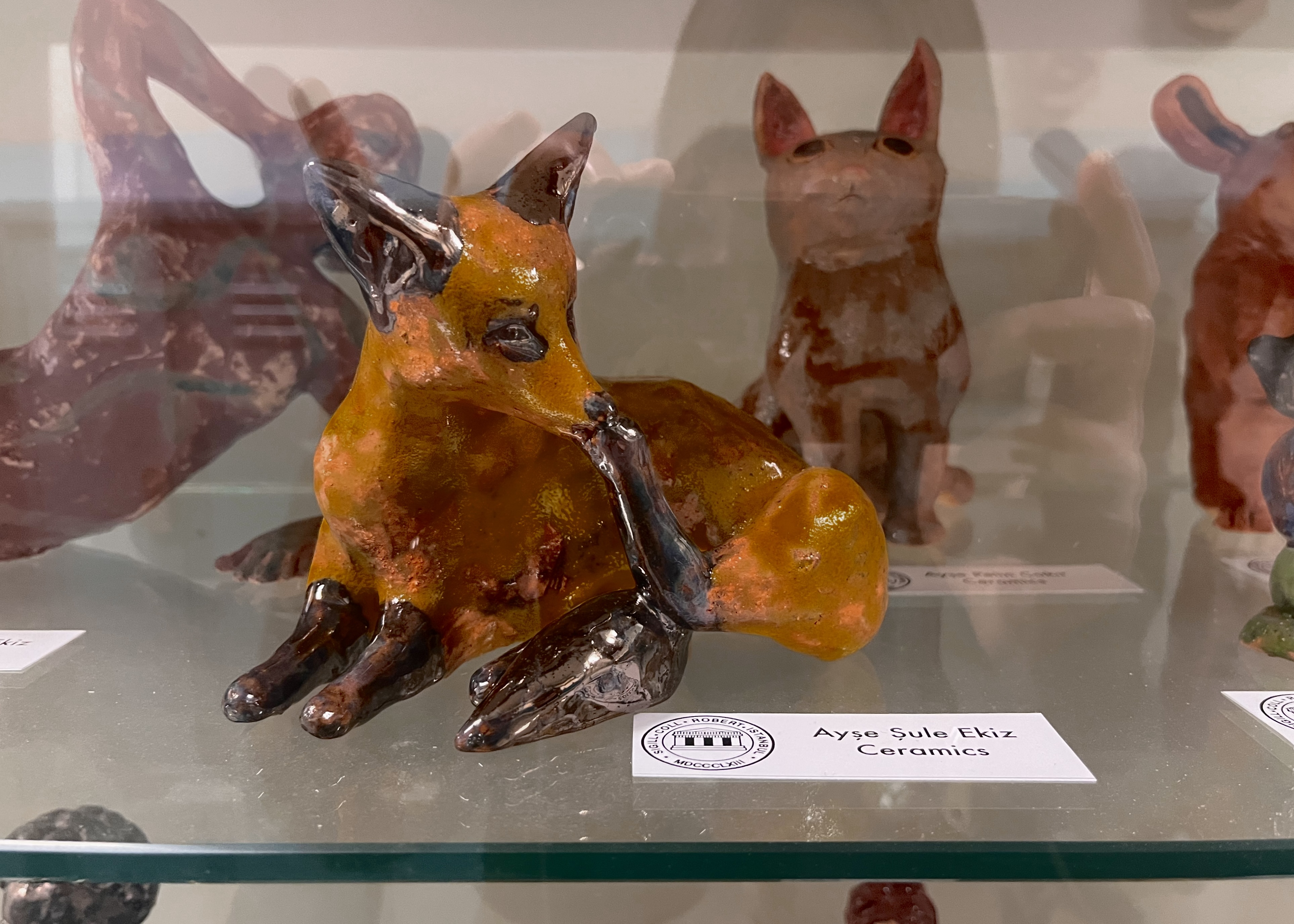
Fox Figure – Glazed
The fully glazed fox figure, ready for display.
After glazing and the final firing, the fox took on a more finished personality. The glaze highlights small textures in the fur and softens some of the sharper transitions in the clay. Seeing it as a completed piece helped me understand how much the glaze can transform the mood of a sculpture.
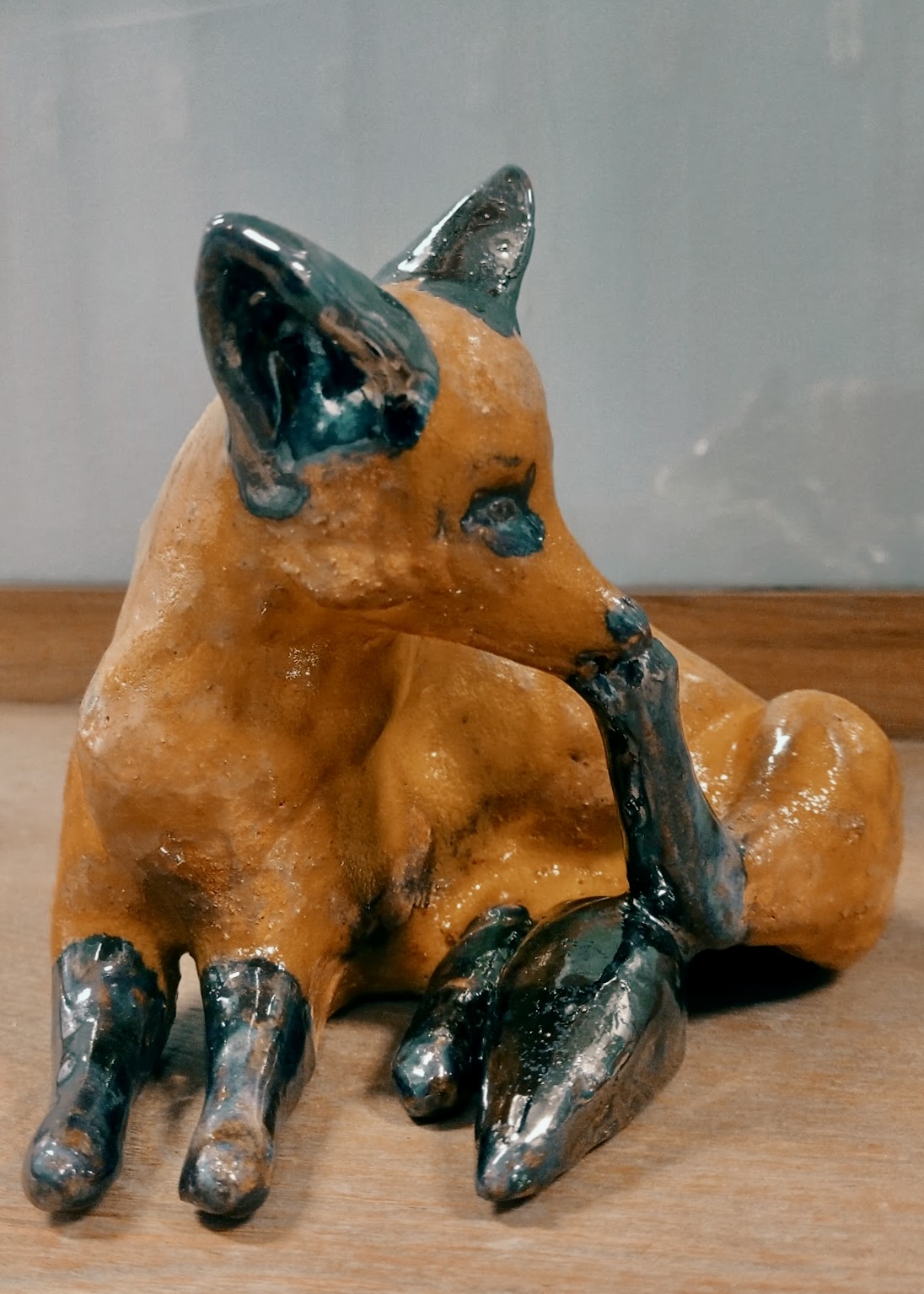
Fox Figure – Profile Exhibition View
The fox sculpture displayed in my school exhibition setting.
In this exhibition view, the fox is shown in a more naturalistic setting & lighting. Displaying the piece outside the studio changes how it is read—it becomes part of a story and invites viewers to imagine the fox’s environment and personality.
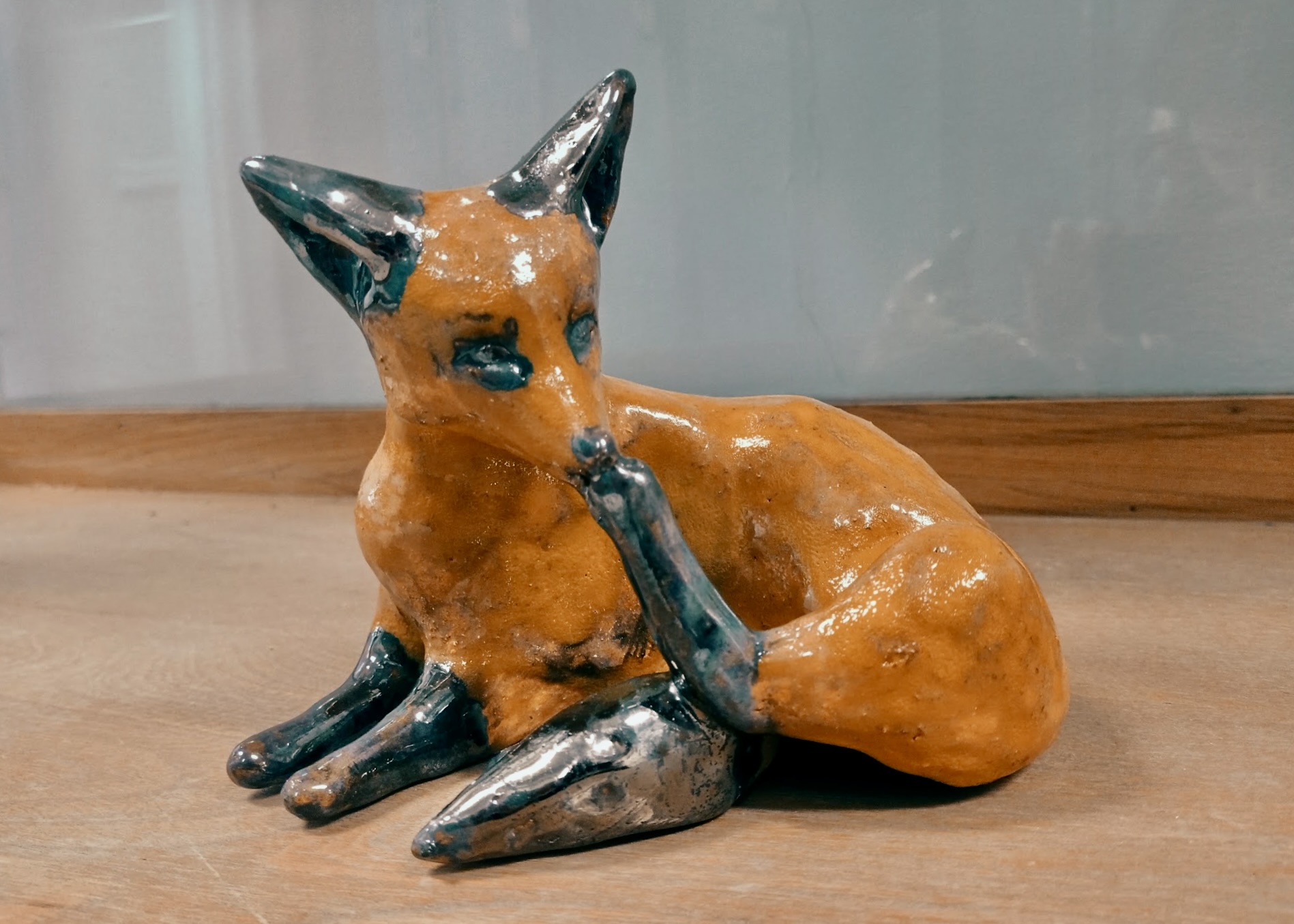
Fox Figure – Front Exhibition View
Another exhibition angle of the finished fox sculpture.
This angle emphasizes how the fox interacts with the display surface and the space around it. I enjoy documenting sculptures from multiple viewpoints because it shows how three-dimensional work is never experienced from just one fixed perspective.
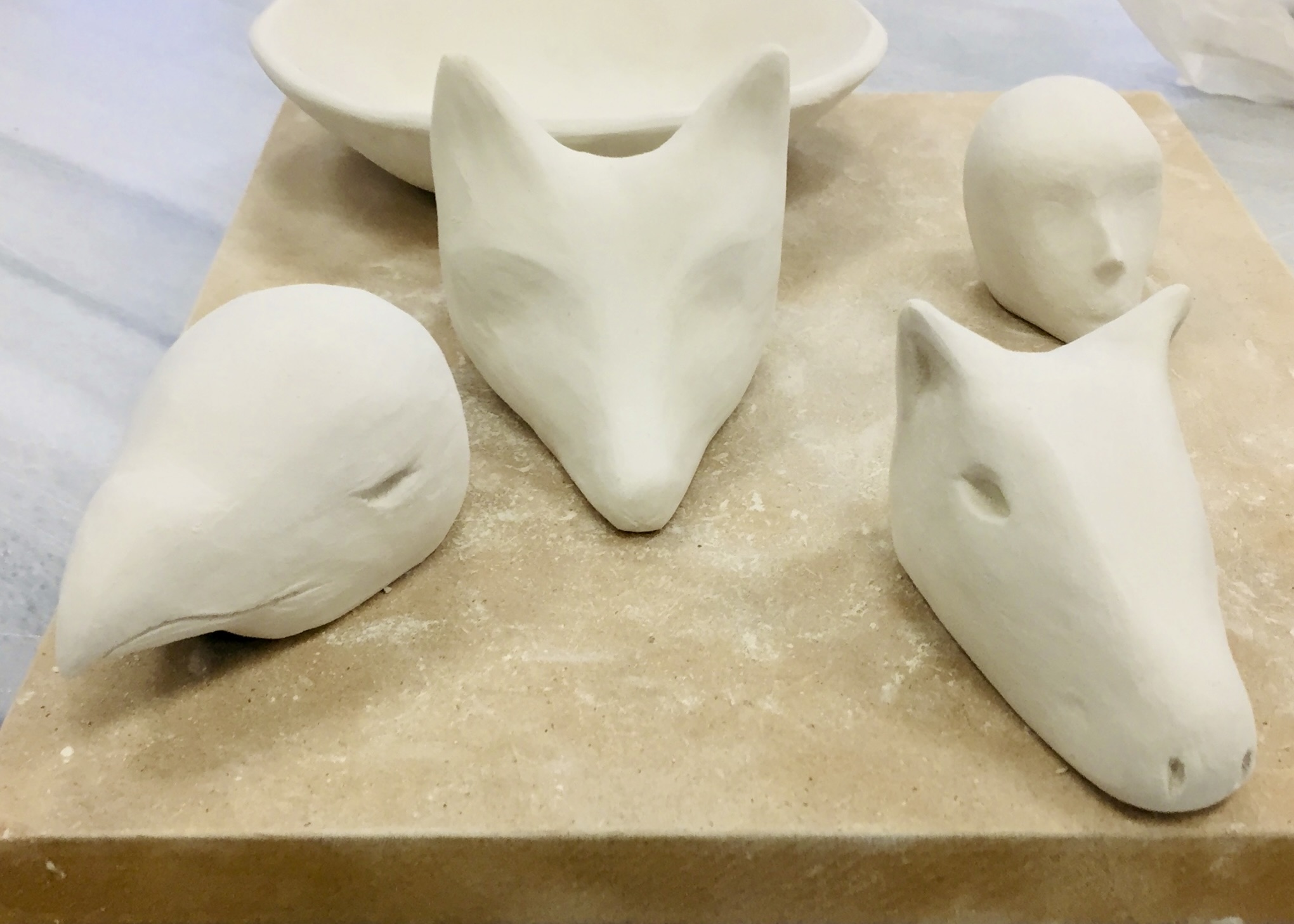
Ceramic Animal Heads
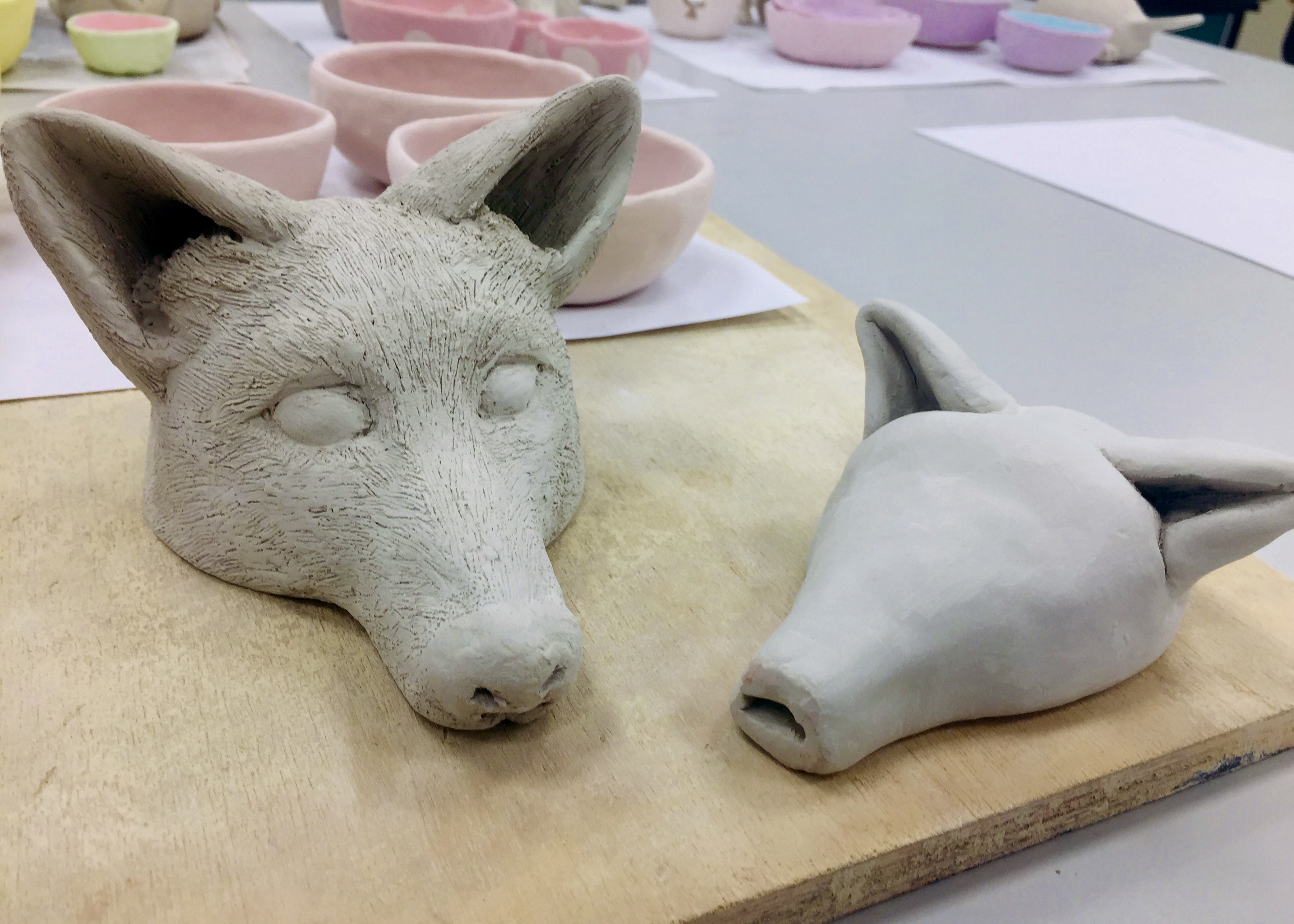
A series of bisque-fired animal head sculptures made from white clay.
These animal heads were an exercise in studying facial structure, expression, and stylization. Working in white clay allowed the forms and carved details to stand out clearly, without the distraction of strong color. Each head represents a different animal and mood, letting me play with exaggeration and subtlety in the features.
Animal Ocarinas
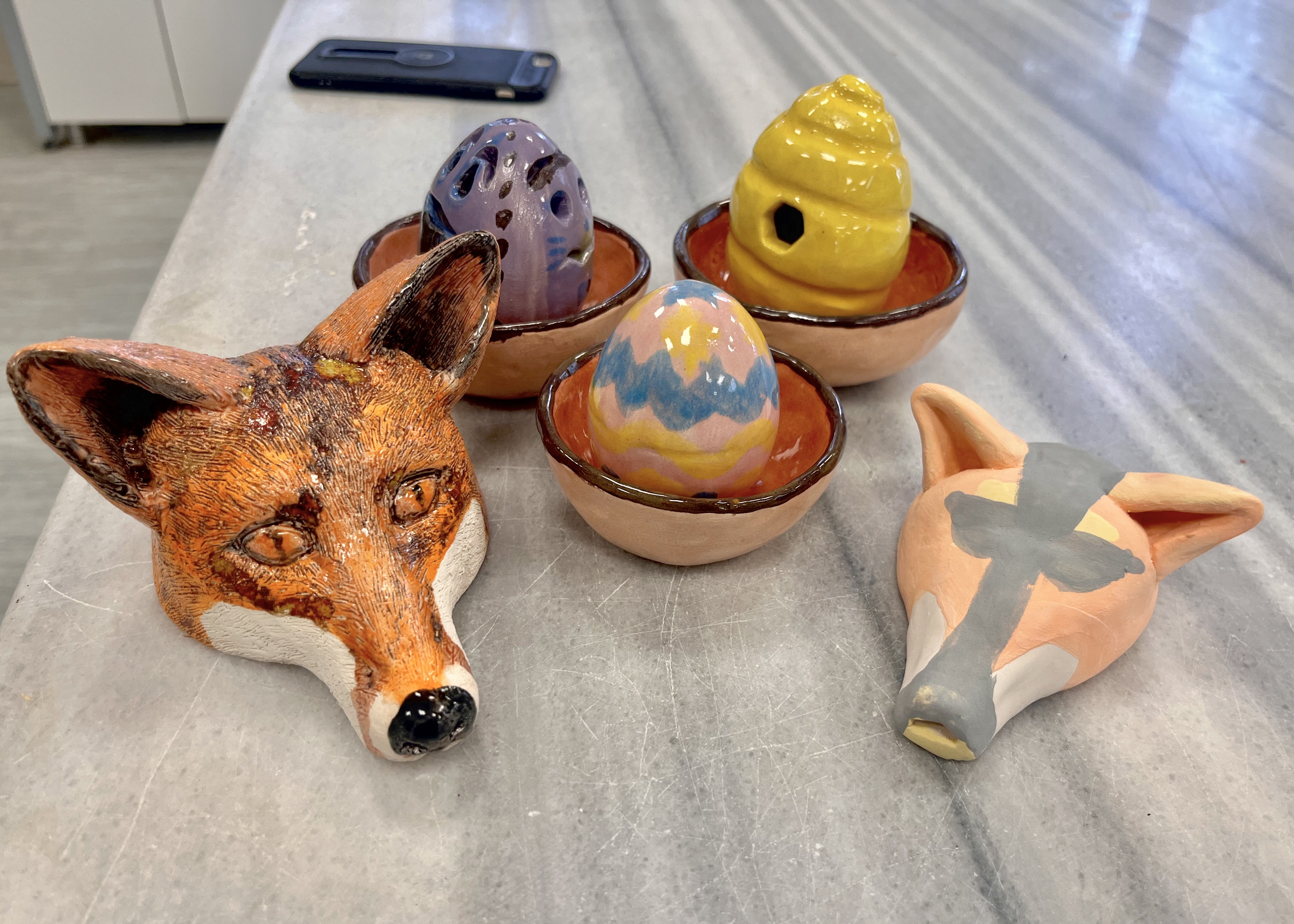
Functional ocarinas shaped like a fox and what is supposed to be a coyote, combining sculpture and sound.
These animal-shaped ocarinas are made from white clay and designed to be both playful objects and working instruments. Each piece has carefully placed openings so it can create different tones when played. I enjoyed the challenge of blending function with character, letting the animals’ forms still read clearly while making sure the pieces remain playable.
Mini Ceramics
A collection of small ceramic experiments in form and texture.
These mini ceramics are like a three-dimensional sketchbook. I used white clay to test ideas quickly—trying out new shapes, textures, and proportions on a small scale before committing to larger works. Many of these pieces, including the ocarinas, pinch pots, and eggs, helped me understand how small changes in thickness, curve, or detail can completely change the personality of a form.
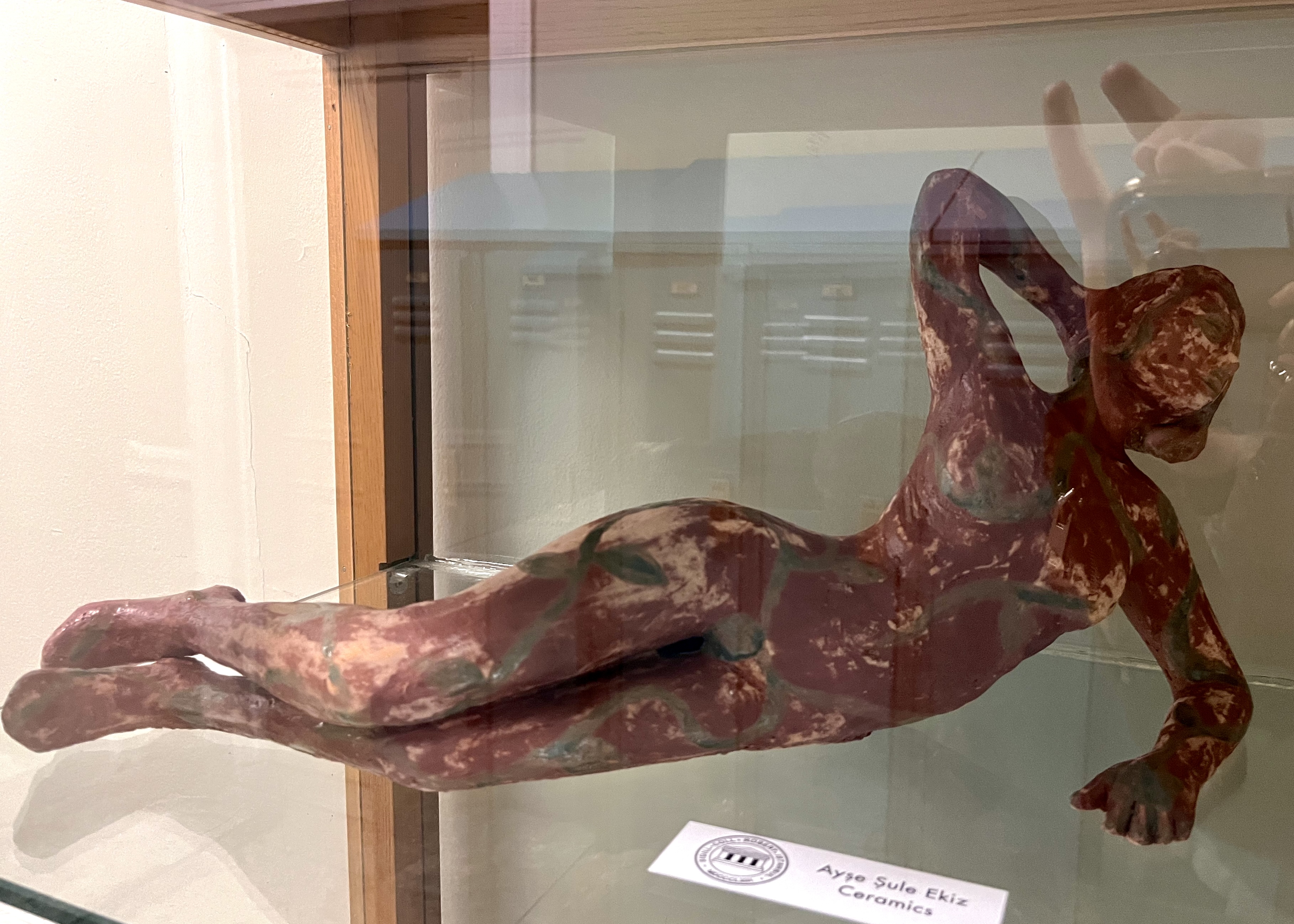
Giant Woman Figure – In Progress
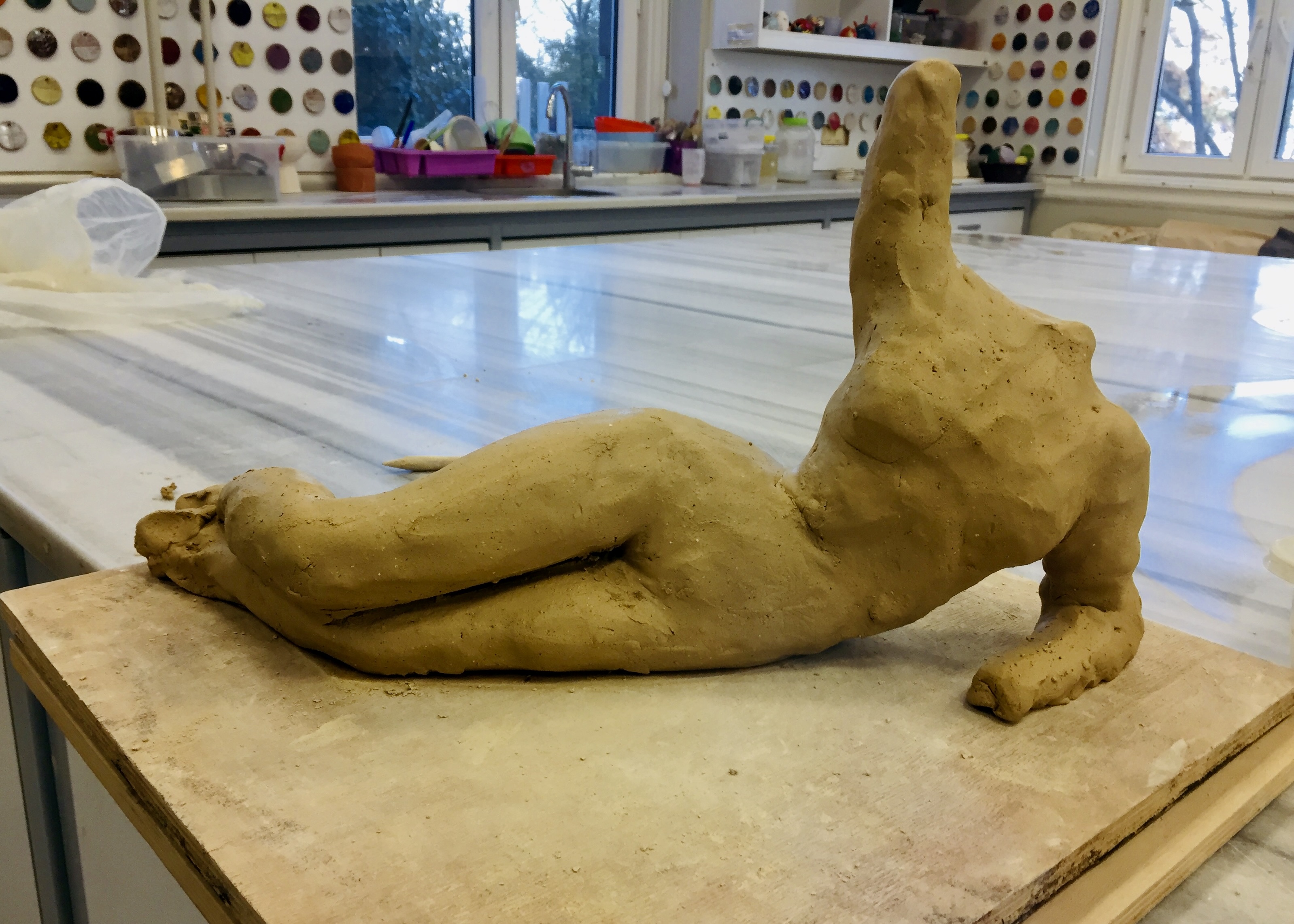
A large reclining woman figure in brown clay, captured mid-process.
This sculpture, approximately 50 cm tall, marks one of my first experiences working at a larger scale in clay. Inspired by Cleopatra by Demetre Chiparus, I was interested in translating monumentality and elegance into a ceramic form. At this stage, the focus was on establishing the primary volumes and ensuring structural stability. The reclining pose required careful attention to balance, allowing the figure to feel relaxed while remaining physically supported throughout drying and firing.
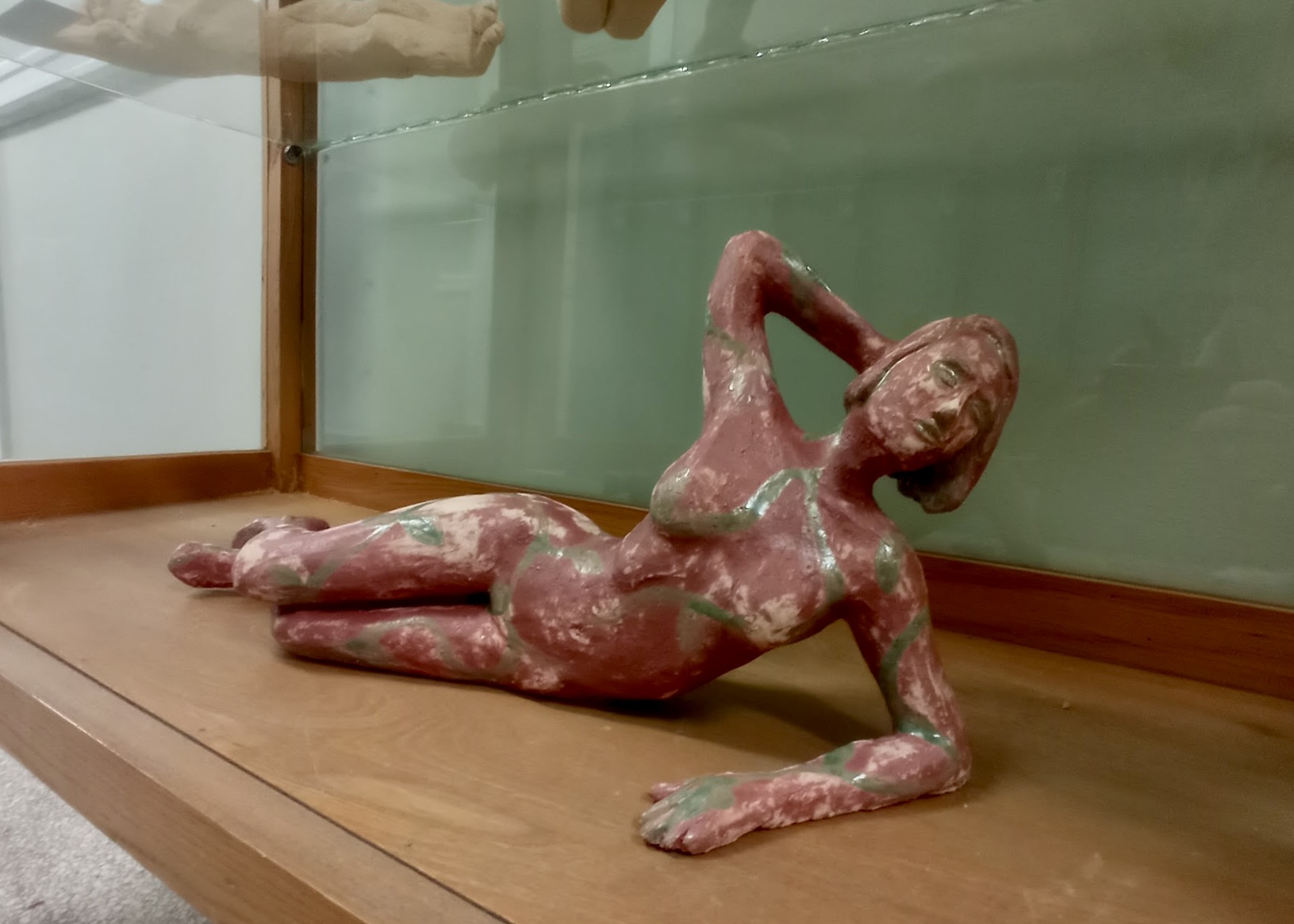
Giant Woman Figure – Glazed
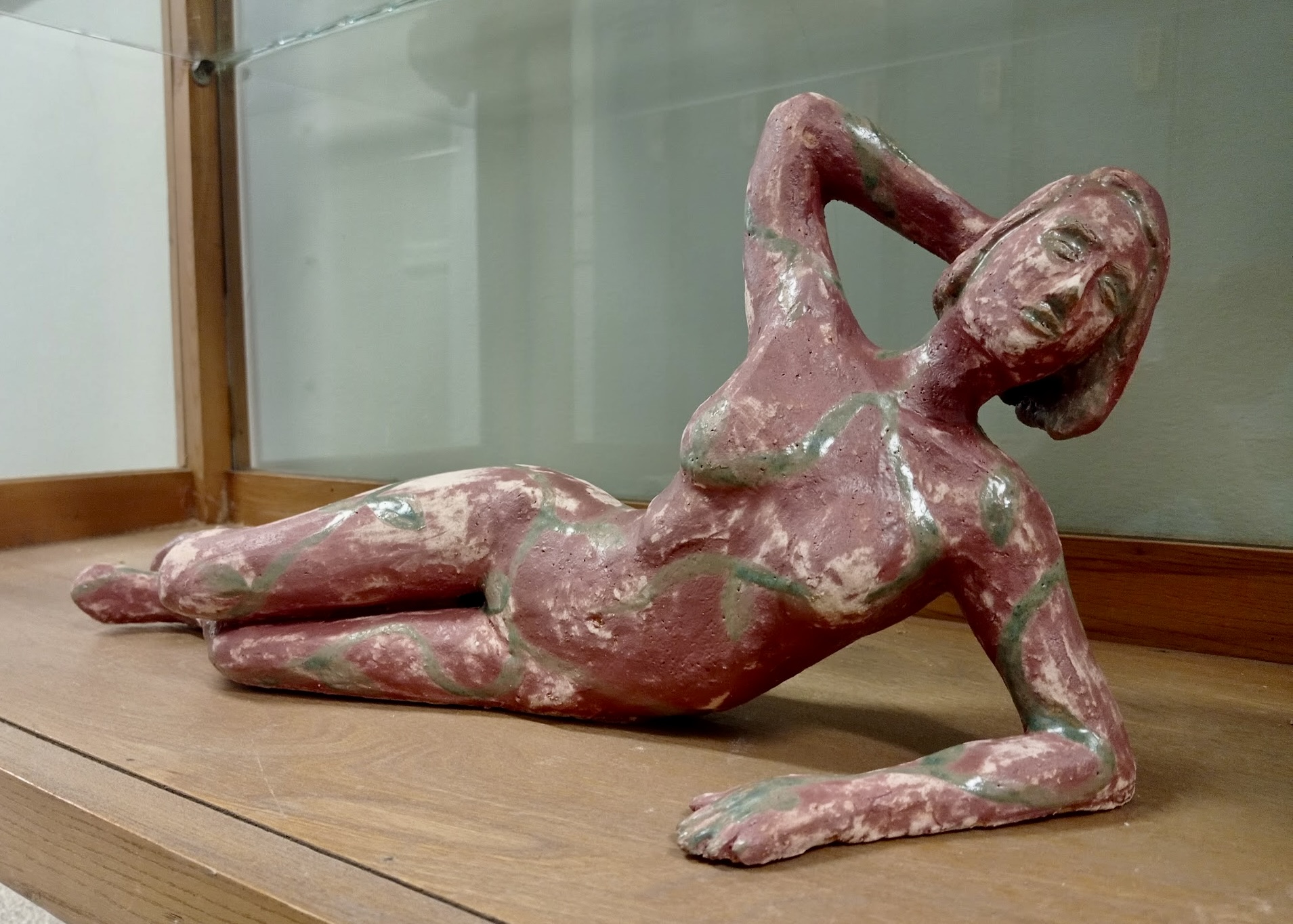
The finished giant woman sculpture with ivy-inspired glazing.
In the finished version, the surface is treated with an ivy-inspired glaze that wraps across the figure’s body. The leaves reference themes of myth, nature, and concealment, subtly alluding to Eve and the tension between covering and revealing. The glaze enhances the curves and folds of the form, while adding narrative depth, combining classical inspiration with a personal visual language.
Giant Woman Figure – Detail View
A closer look at the ivy-inspired glazing and surface details.
This detail view highlights how the ivy-like glaze travels across the surface of the figure, visually connecting different areas of the body. Rather than appearing decorative, the glaze was applied to feel as though it is growing organically from the form. The movement of the leaves guides the viewer’s eye and reinforces the relationship between surface, gesture, and structure.
Giant Woman Figure – Exhibition View
The giant woman sculpture displayed in a gallery setting.
Displayed in an exhibition context, the giant woman figure shifts from a studio project into a resolved sculptural work. Inspired by Chiparus’s theatrical presence and classical influence, the piece invites viewers to walk around it, experiencing changes in scale, posture, and surface from multiple perspectives. The gallery setting emphasizes its dialogue with space and surrounding works.
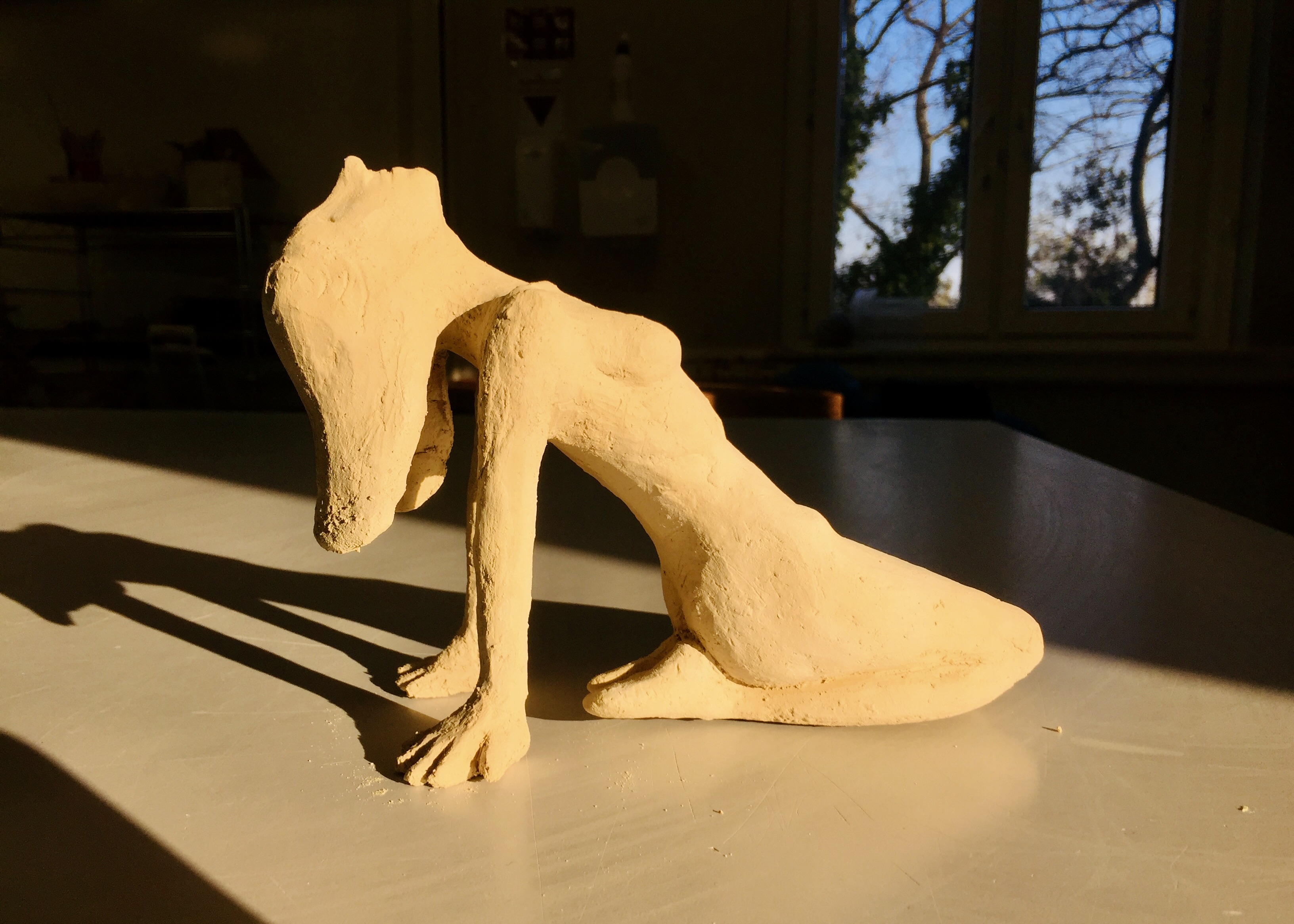
Flexing Woman Figure – Profile View
A brown clay sculpture of a woman flexing at the bisque-fired stage, captured in the sunlight, highlighting the form.
This figure is directly inspired by me, using my own body as a reference for the proportions, posture, and presence. The flexing pose emphasizes the definition and confidence, pushing against passive or idealized representations of the female body. A challenge with this sculpture was balancing the thickness of the arms with the strength of the clay so that it could withstand the firing and glazing stages.
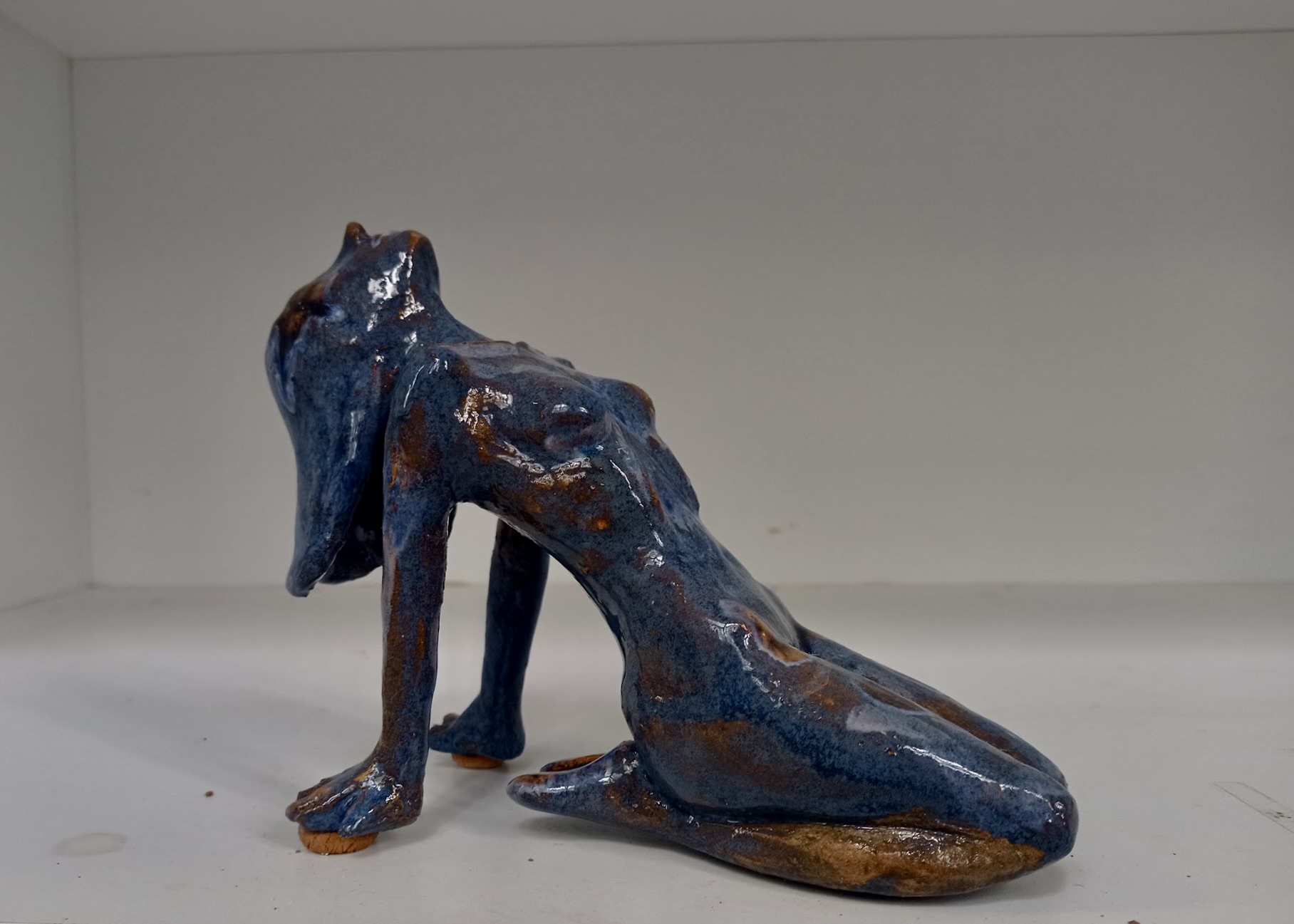
Flexing Woman Figure – Profile View
Glazed brown clay sculpture of a woman flexing before exhibition.
This scale study challenged me to rethink structure and process while continuing to use my own body as a reference. Building the sculpture in stages required careful attention to internal support, drying time, and wall thickness. The experience strengthened my interest in large-scale figurative ceramic work rooted in personal identity and physical presence. The color choice for the glaze was also difficult to decide on, but in the end, I was really pleased with how blue it turned out, giving the figure an Avatar-like finish.
Metal Glaze Works
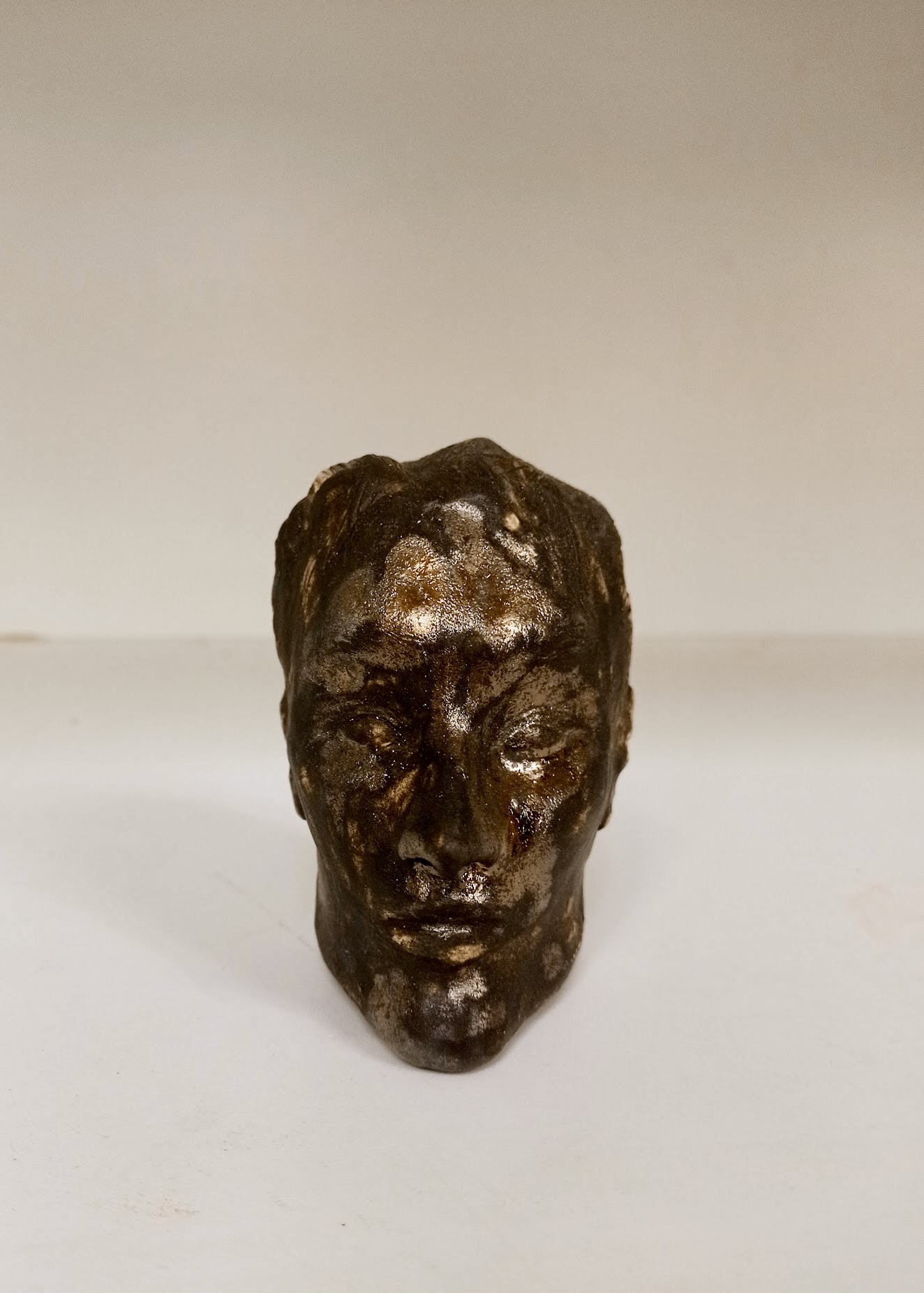
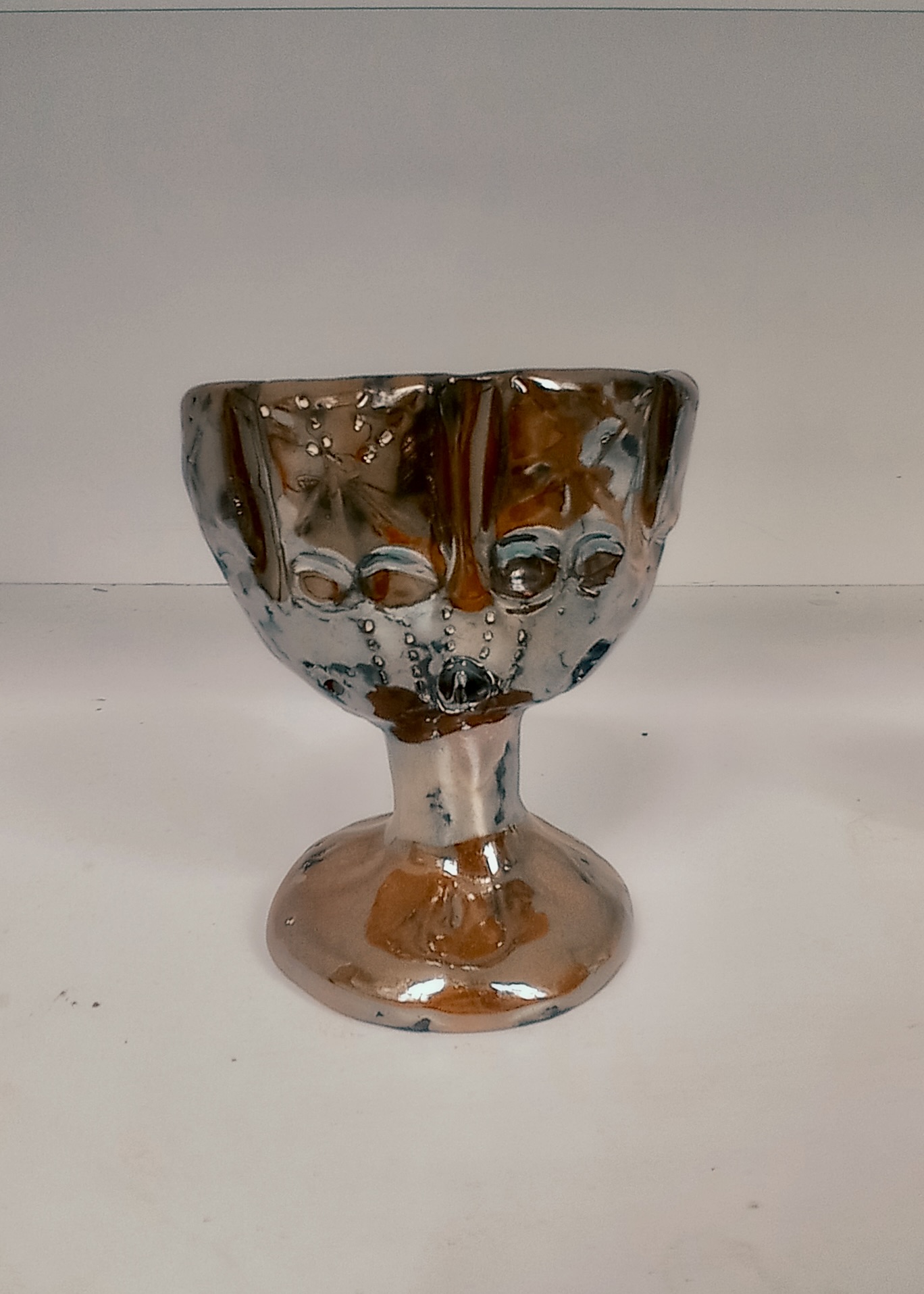
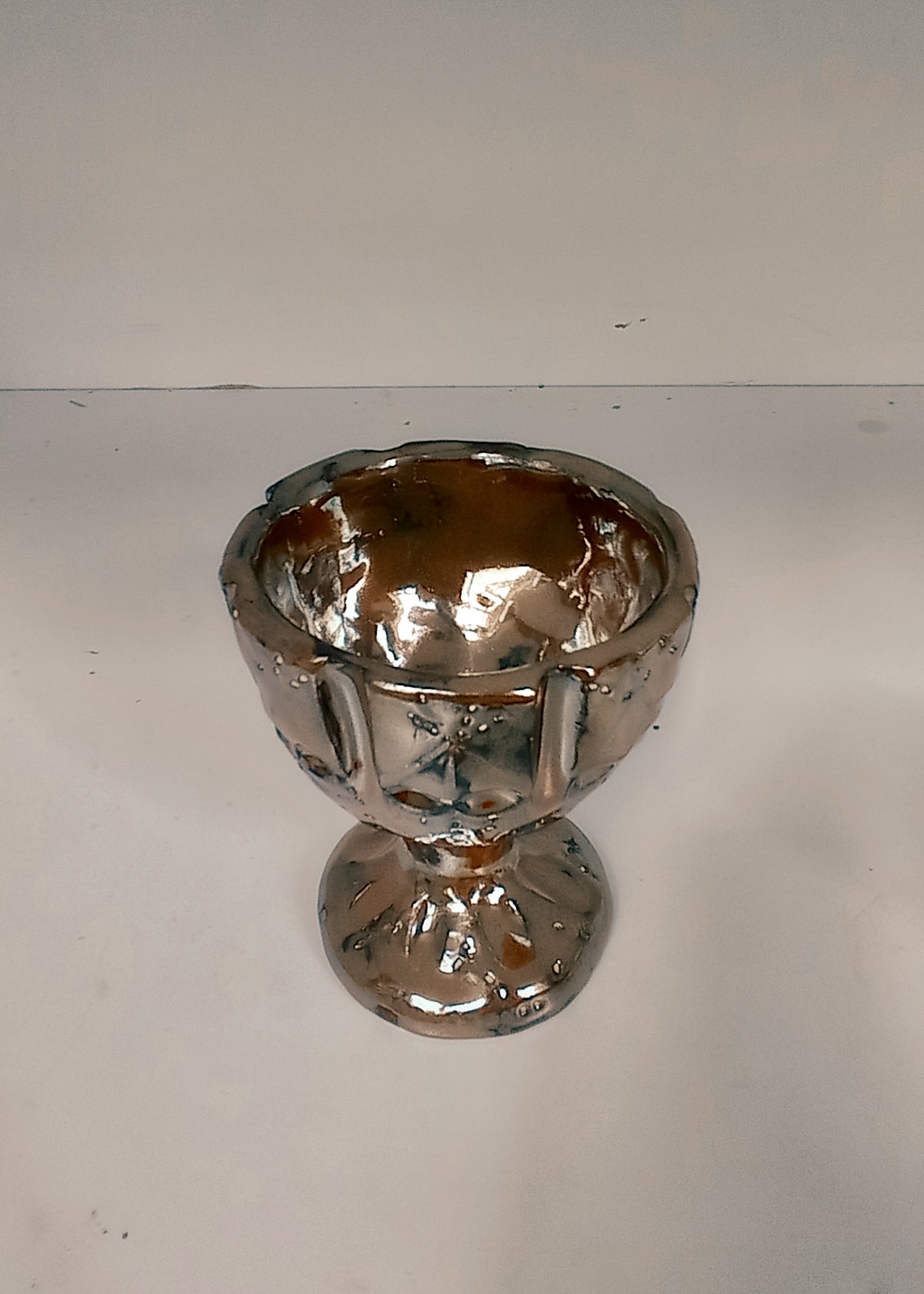
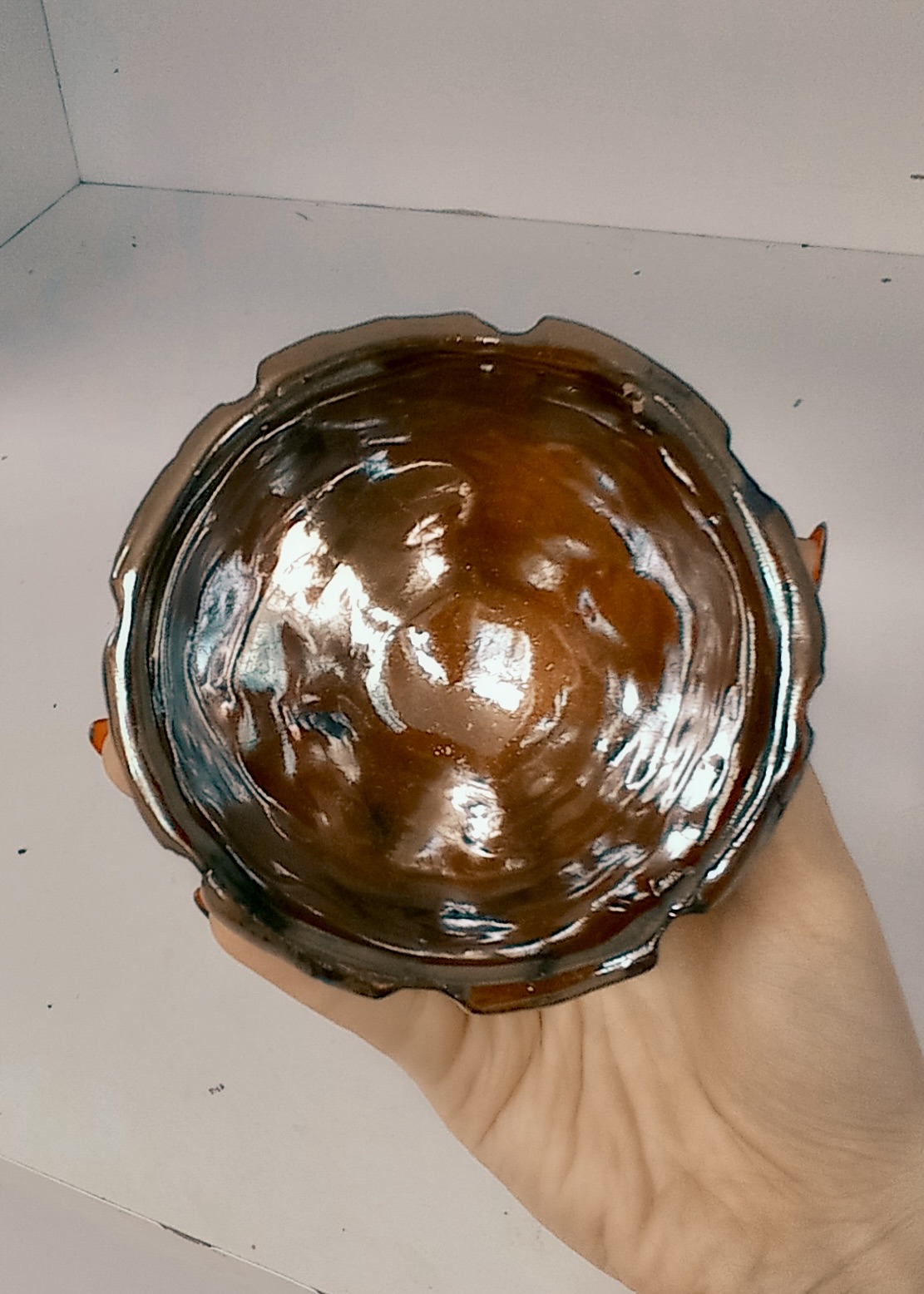
In this series, I explored metallic and reflective glazes on sculptural forms like heads and goblets. These surfaces react strongly to light, so I considered how each piece would look from different angles and in different environments. The work sits somewhere between functional objects and small monuments.
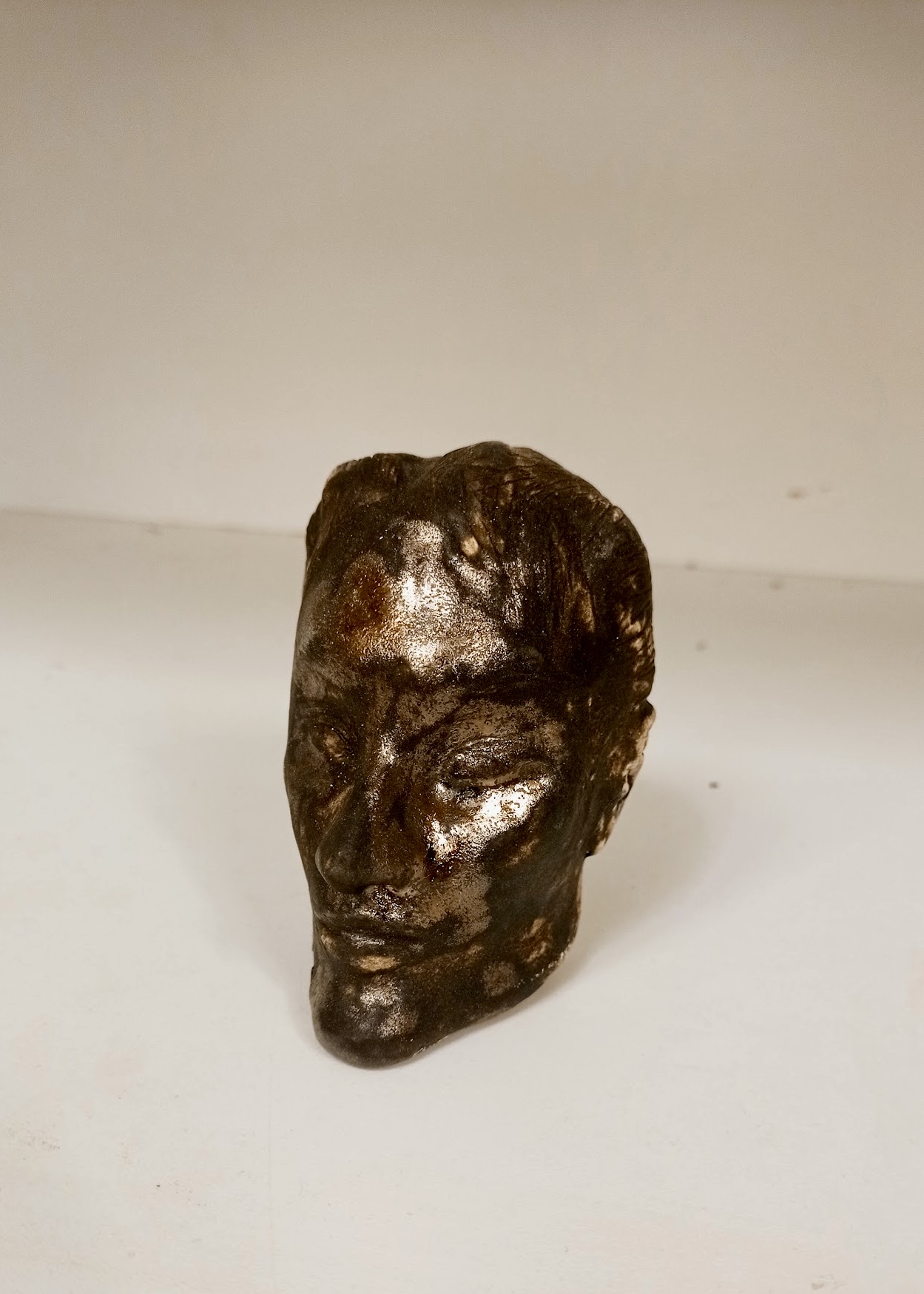
Head Figure – 3/4 View
A glaze-fired head sculpture exploring expression and surface reflection.
This head figure focuses on the planes of the face and how glaze catches and reflects light across them. I aimed for a balance between realistic features and a stylized, almost mask-like presence. The metallic quality of the glaze gives the piece a quiet but intense energy when viewed up close.
Head Figure – Front View
Front view of the metallic-glazed head sculpture.
From this angle, the highlights and shadows created by the glaze become more dramatic. I enjoyed how the reflective surface transforms the expression slightly depending on the lighting, making the piece feel more alive and changing throughout the day.
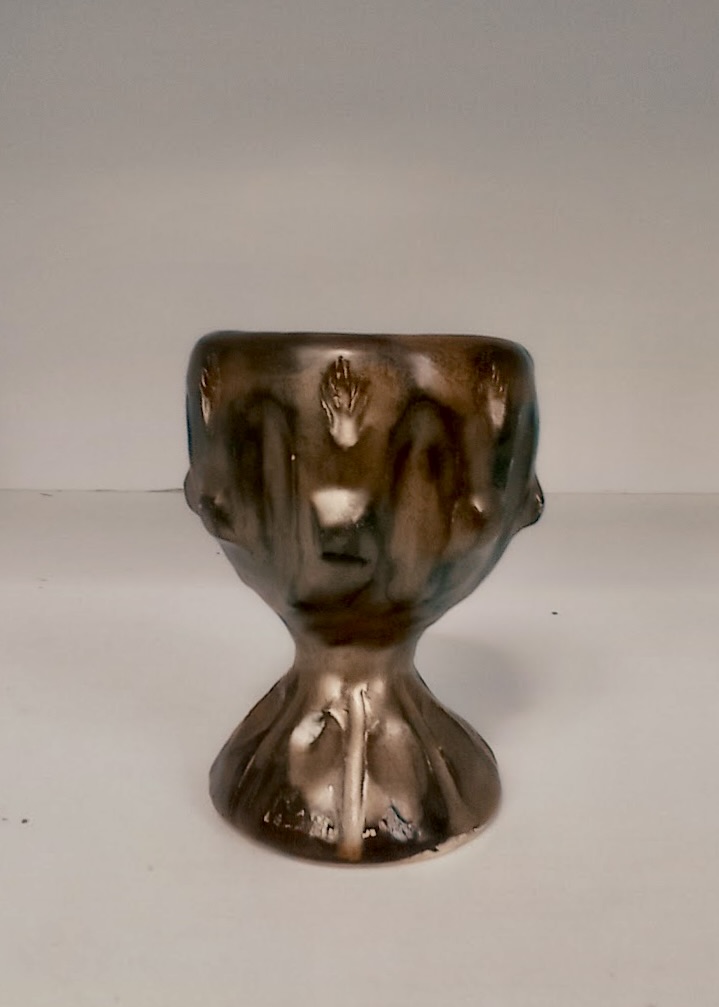
Goblet 1
A metal-glazed goblet inspired by historical ceremonial vessels.
This goblet was an opportunity to study proportion—the relationship between the bowl, stem, and base. The metallic glaze gives it a ceremonial feeling, almost like something from a different time period. I wanted it to feel both functional and slightly otherworldly.
Goblet 2
A companion goblet exploring slight variations in height and curve.
Goblet 2 is part of a small series where I repeated the basic form but changed details like the height of the stem and the curve of the cup. The metallic glaze ties the pieces together, turning them into a family of related forms rather than identical copies.
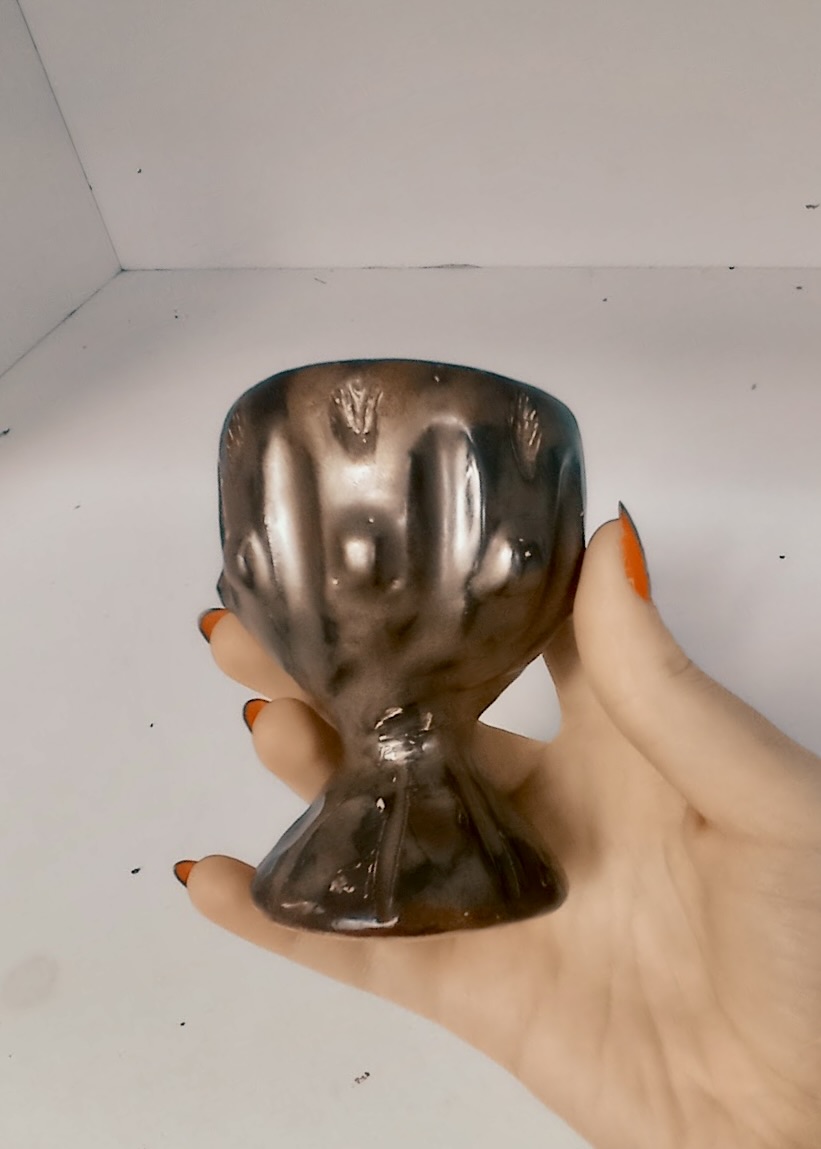
Goblet 2 - Top View
Goblet 2's view when the user holds.
For Goblet 2, I stretched the form slightly wider cup to see how far I could push the proportions while keeping the piece balanced. The reflective glaze helps accentuate its shape, drawing the eye to each light play along the stem and cup.
Mini Goblet
A small goblet study exploring matte metallic glaze on a compact form.
This mini goblet was a way to test how the metallic glaze behaves on smaller surfaces. The reduced scale makes every curve and edge more noticeable, so I focused on keeping the form clean and the transitions smooth.
Mini Goblet Handled
Mini goblet, pairing with the first as a small set.
Mini Goblet continues the exploration of small-scale functional forms. It forms a pair that feels collectible and intimate—like objects meant to be held and examined closely rather than used every day. The matte metallic glaze also creates the feeling of this item being old and used.
Pottery
My pottery work focuses on functional forms—cups, bowls, and small vessels that could live in everyday spaces. Through these pieces, I experimented with repeated shapes, testing how slight changes in height, rim thickness, and glaze application can create unique personalities within a series of similar forms. I also enjoy mixing different types of clay to explore contrast, texture, and material interaction.
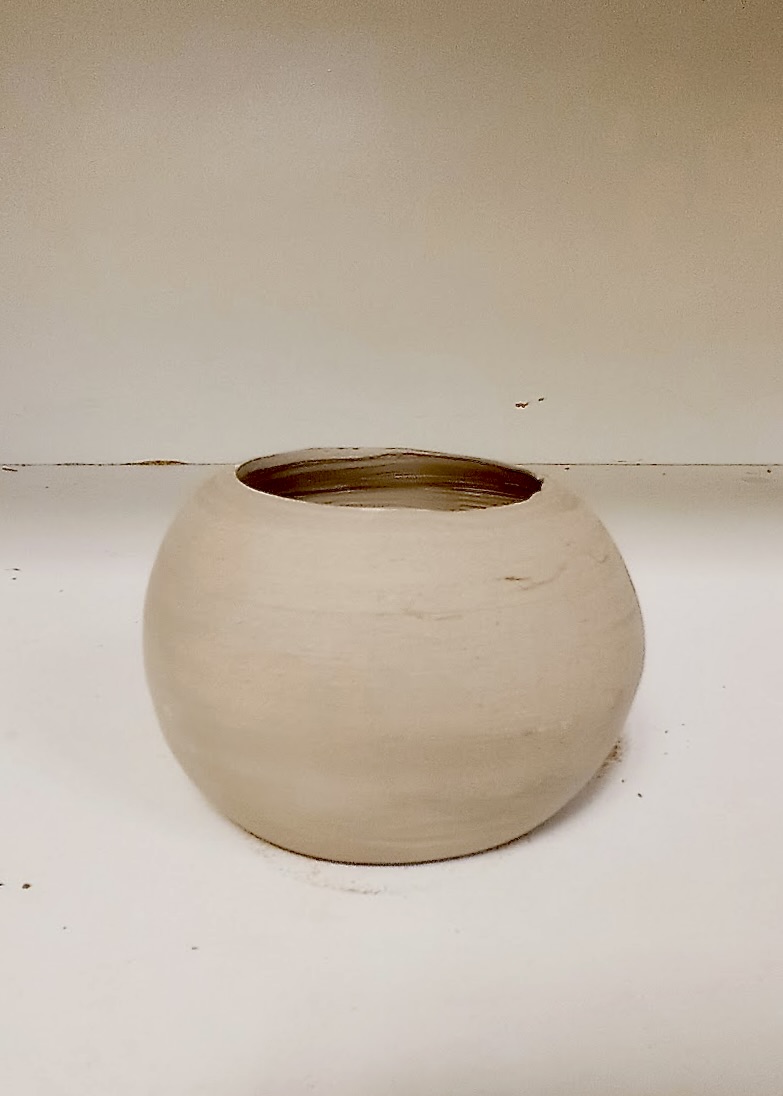
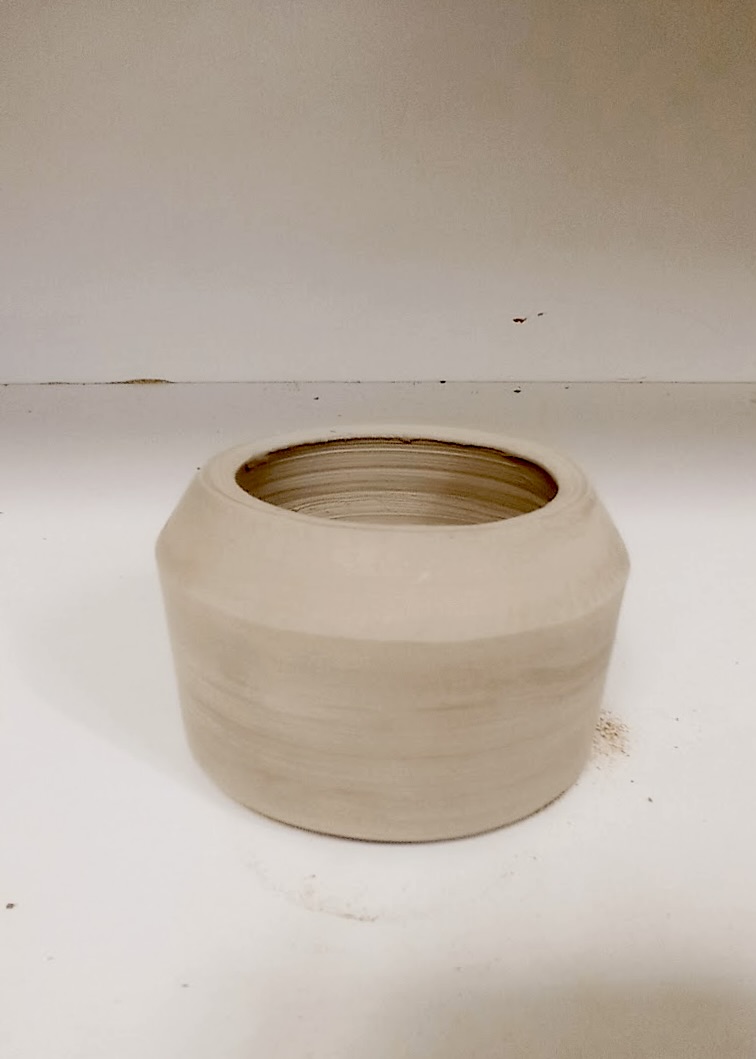
Pottery Vessel Trial #1
A smoothly shaped white clay vessel created as part of a student pottery series.
This vessel explores a calm, rounded form made from white clay, focusing on balance and simplicity. The smooth transitions between the base, body, and rim emphasize softness and approachability. Created as an early study, the piece reflects an exploration of proportion and basic wheel control while maintaining a functional and tactile quality.

Pottery Vessel Trial #2
An angular-shaped white clay vessel created as part of a student pottery series.
This piece introduces a taller profile and sharper transitions between the body and neck. The angular form gives the vessel a more structured and formal presence. Highlights these edges, allowing the geometry of the piece to become more visually pronounced.

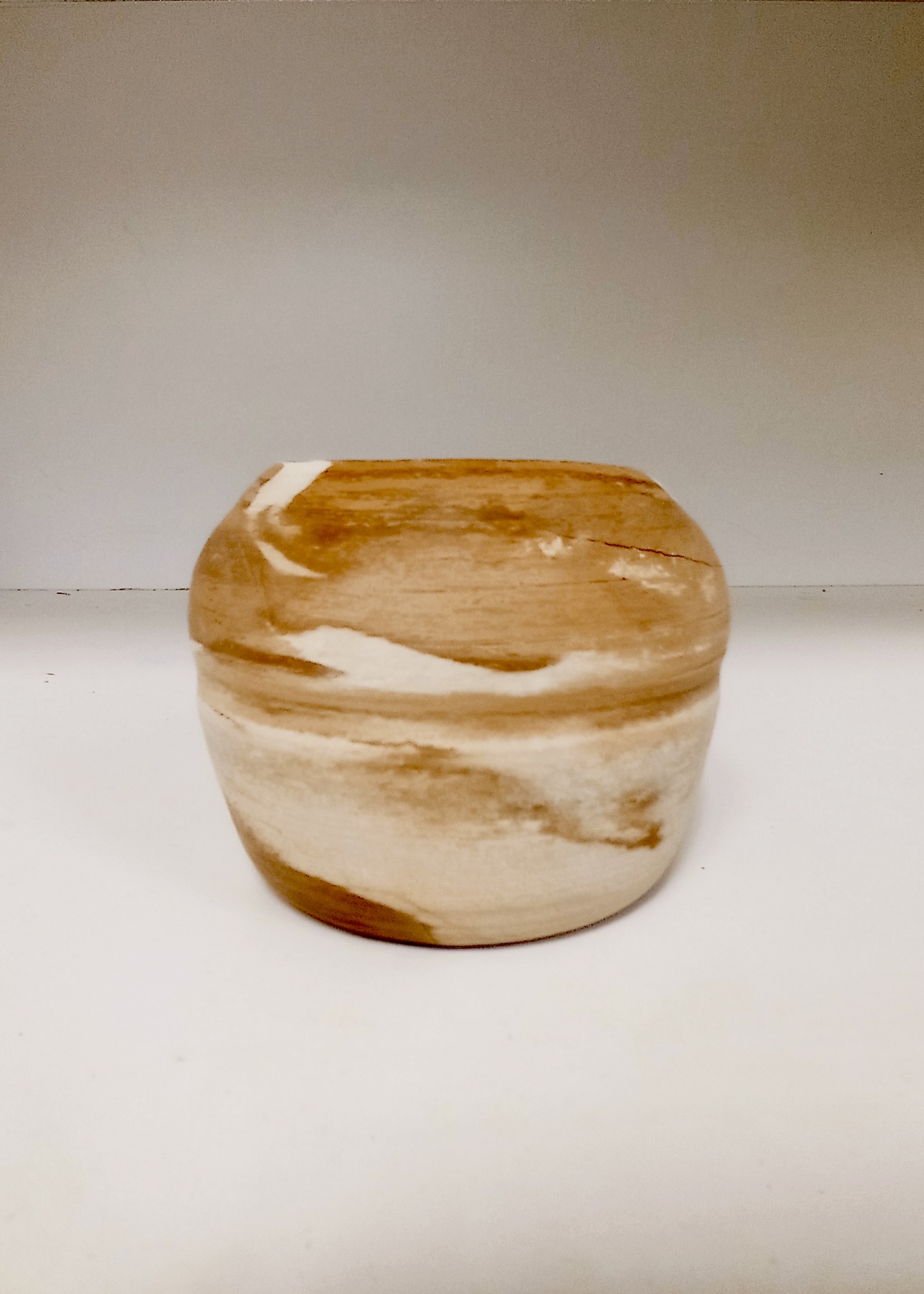
Pottery Vessel Trial #3
Vessel made with a mix of red and white clay, shaped into a softer silhouette.
Made from a combination of red and white clay, this vessel emphasizes warmth and organic character. The rounded form and subtle clay variation create a comforting, familiar object. The piece was designed to feel suitable for everyday use while maintaining a sculptural presence.

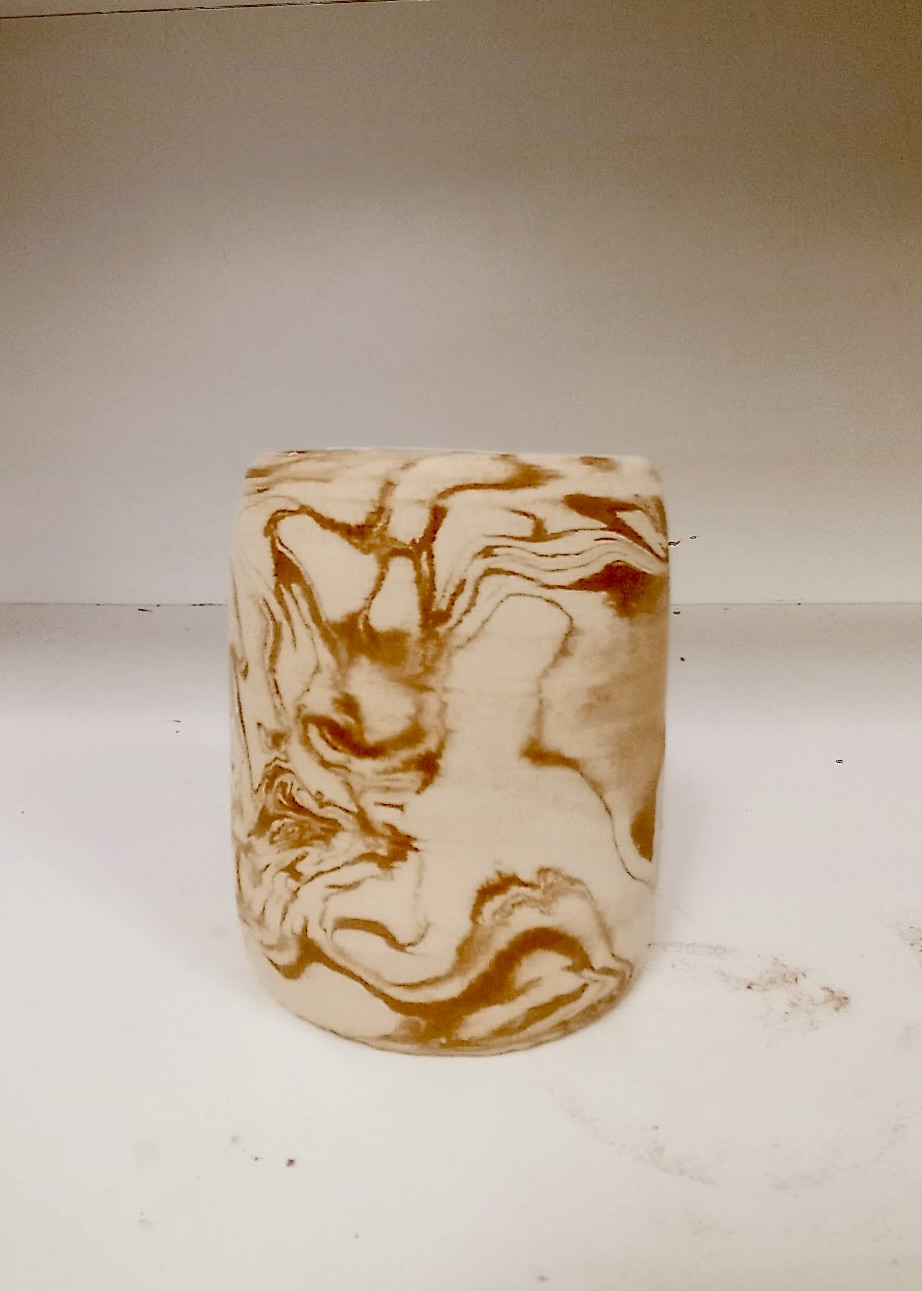
Pottery Vessel Trial #4
Cylindrical vessel made with a mix of red and white clay.
This cylindrical vessel features a wide opening, allowing it to function as both a bowl and a small serving piece. The proportions emphasize stability and balance, while the mixed clay body adds subtle contrast without overpowering the form.

Pottery Vessel Trial #5.1
Bowl-shaped vessel made with a mix of red and white clay.
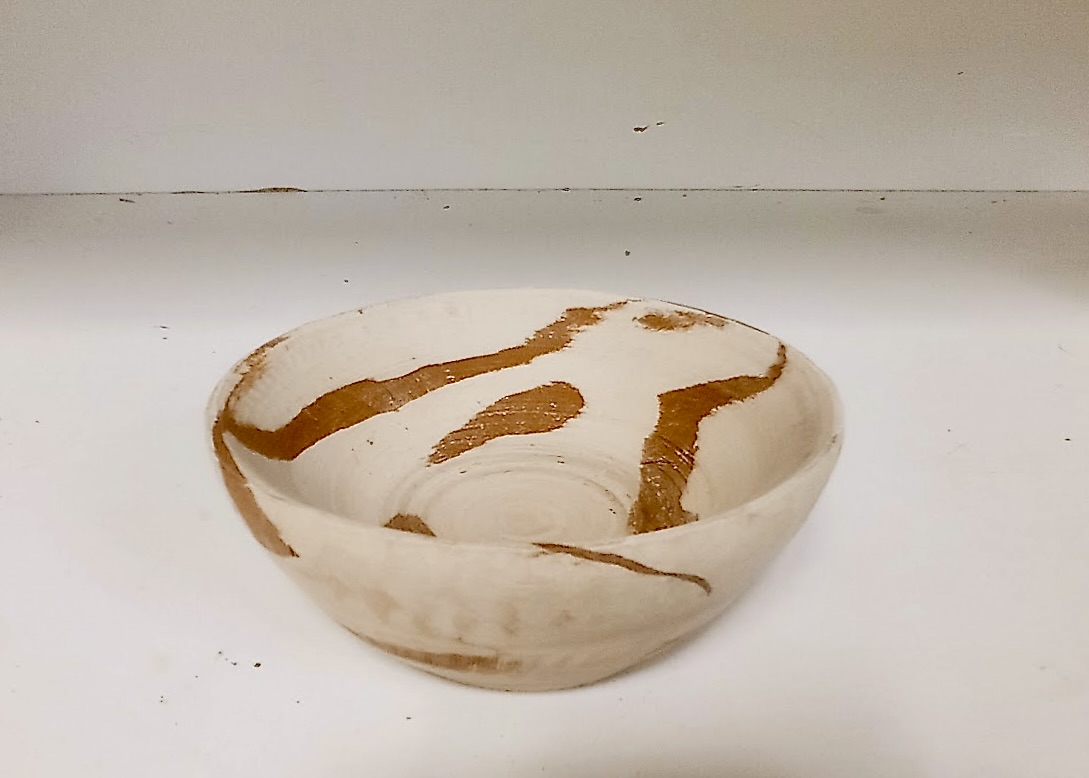
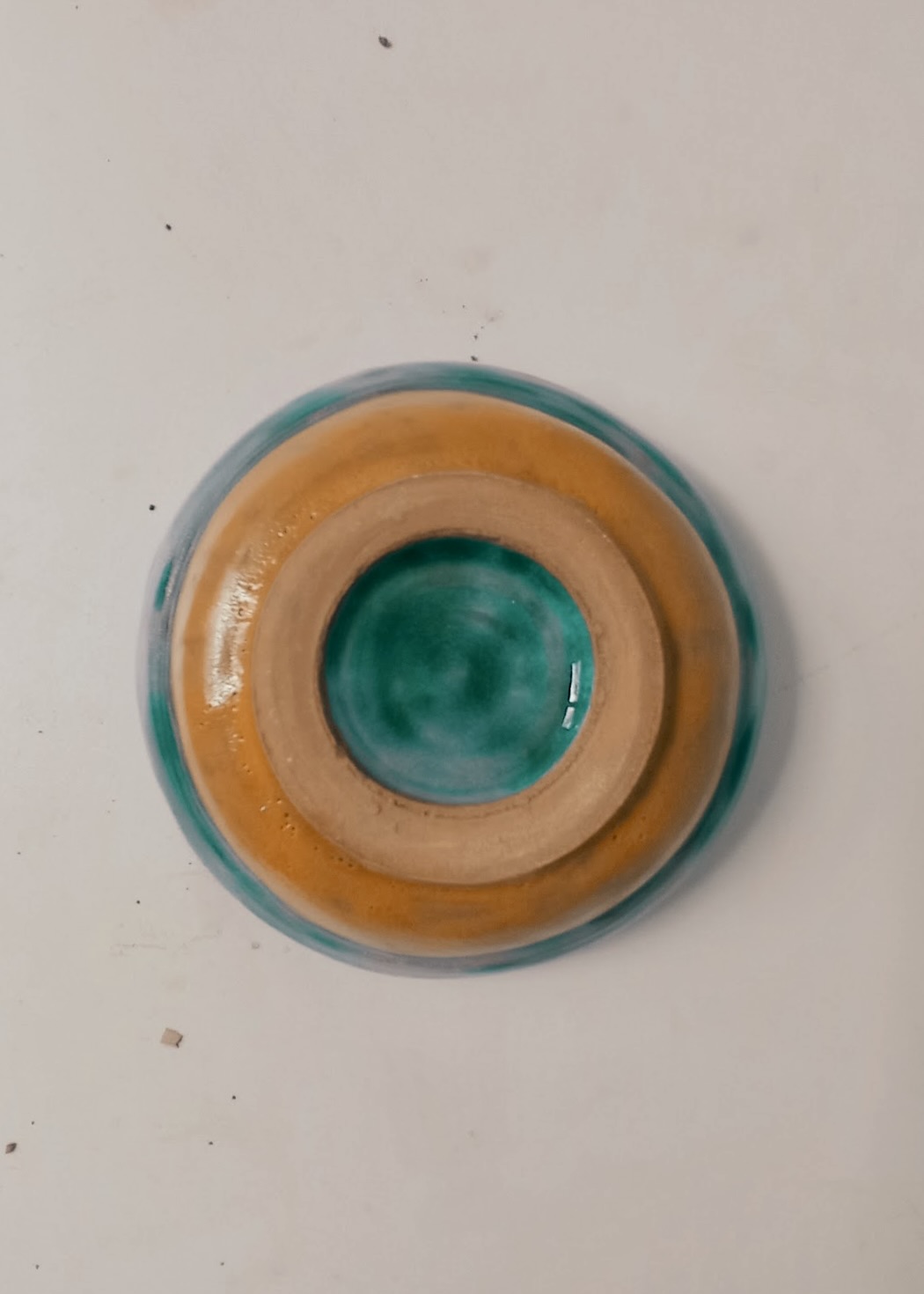
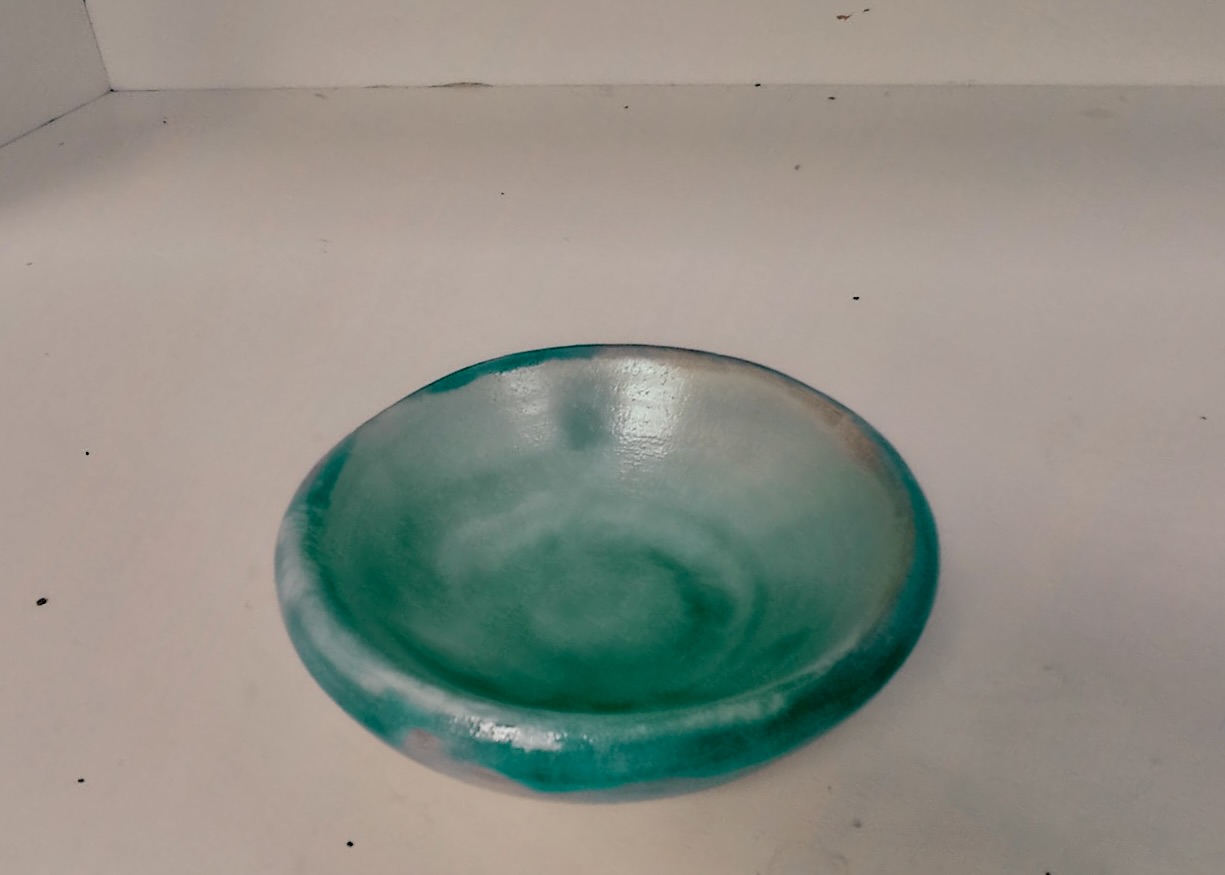
This bowl explores how variations in wall thickness influence glaze movement across the surface. The resulting texture adds visual interest and encourages close observation. The simple form allows material behavior to remain the primary focus.

Pottery Vessel Trial #5.2
Bowl-shaped vessel made with a mix of red and white clay.
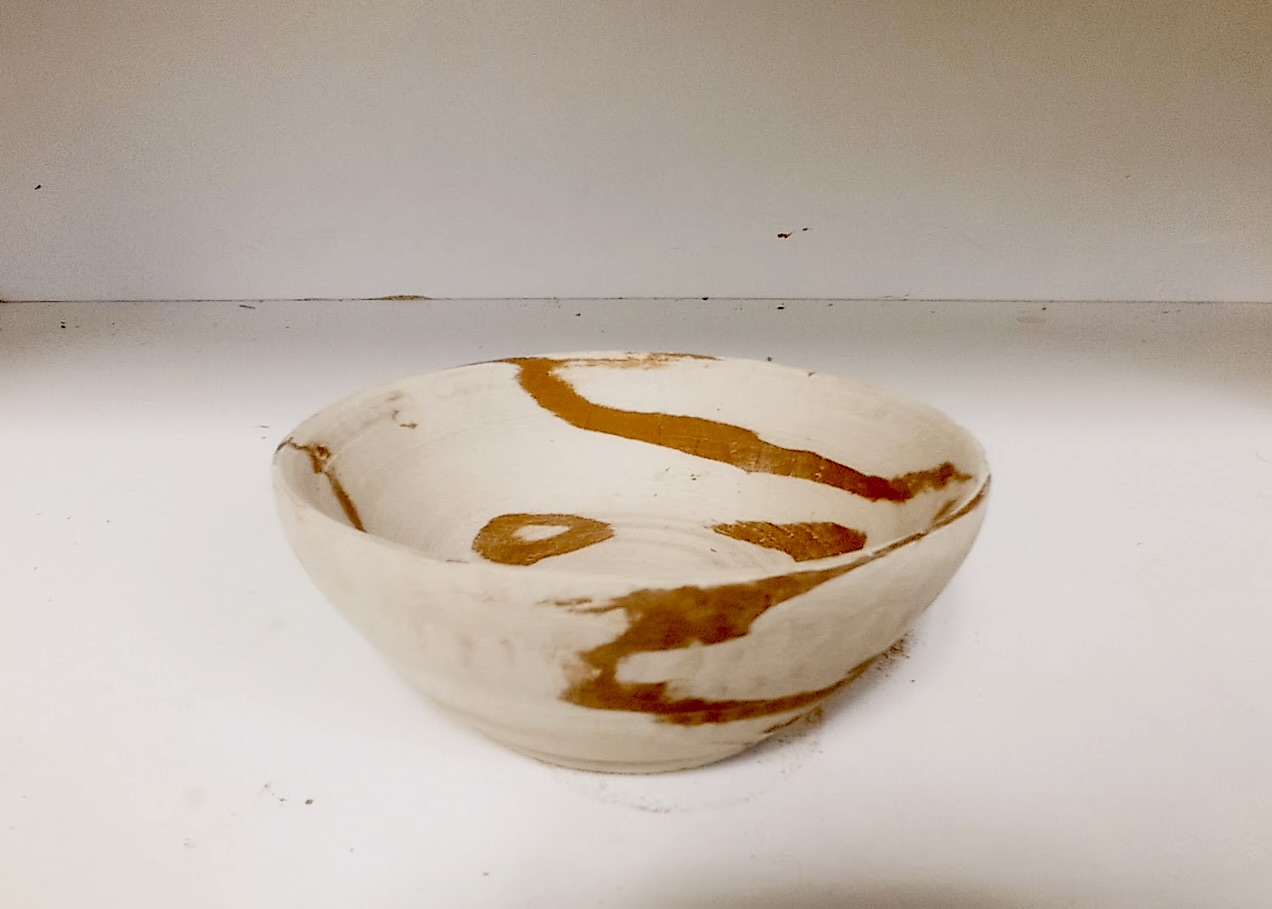
This later piece reflects improved control and refinement. The rim is more deliberate, and the proportions feel more confident. The vessel documents technical growth and a deeper understanding of balance and form.

Pottery Vessel Trial #5.3
Bowl-shaped vessel made with a mix of red and white clay.
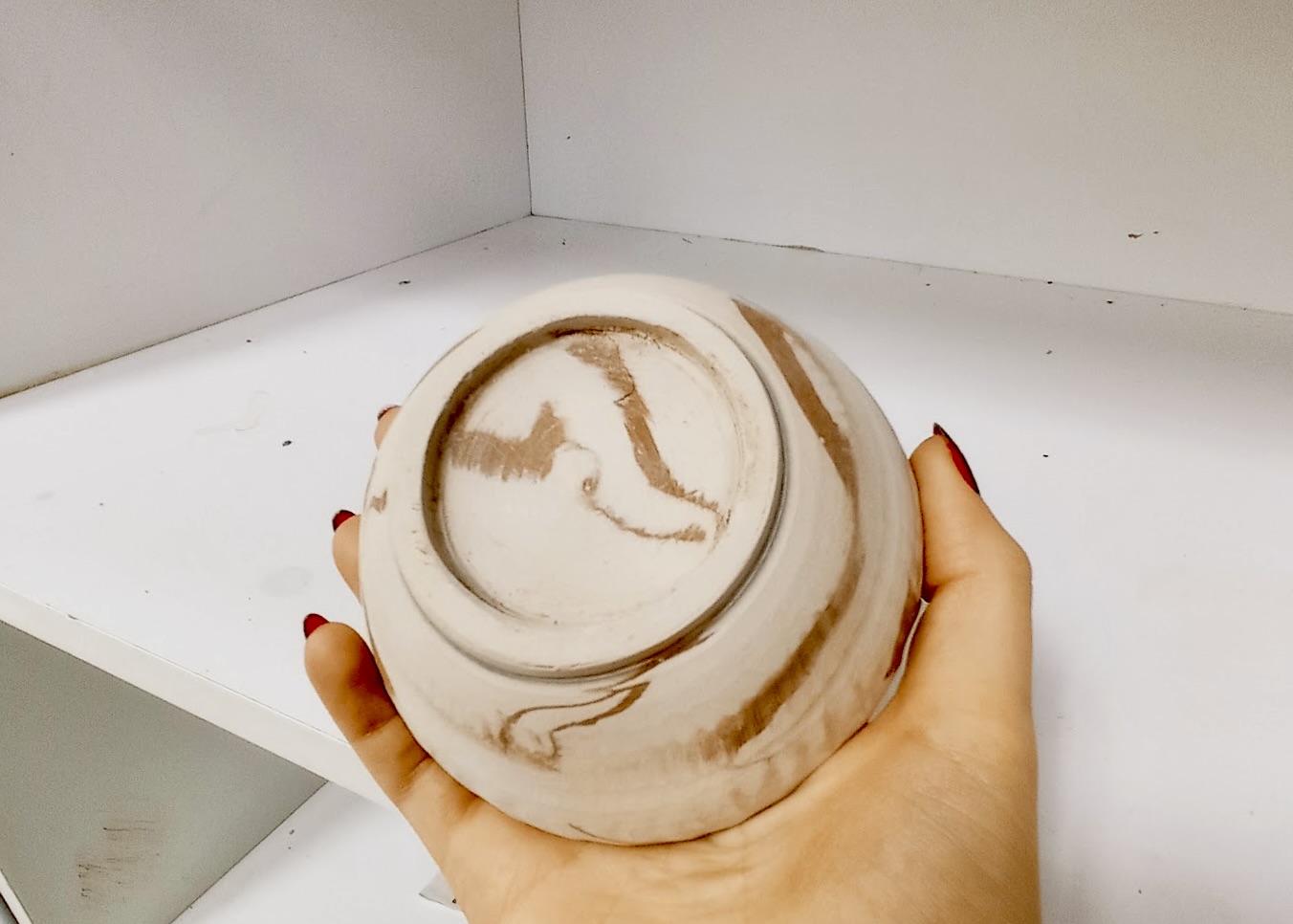
This final vessel brings together balance, surface variation, and functionality. It represents a shift toward seeing the work as part of a cohesive series rather than individual studies. The trimming process was done carefully for each pottery work.

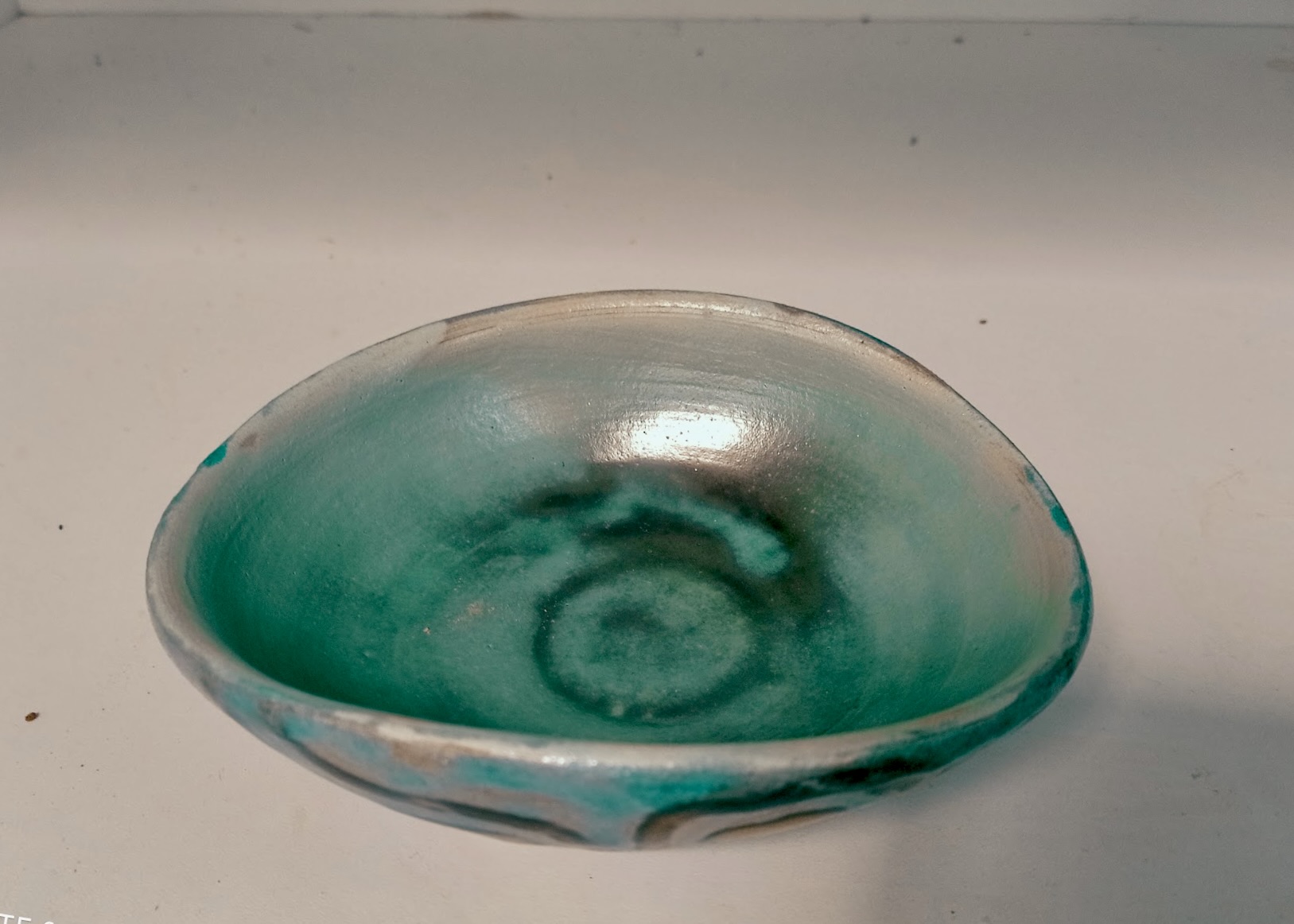
Glazed Pottery Series #1.1
Red clay vessel exploring asymmetrical shape and glaze.
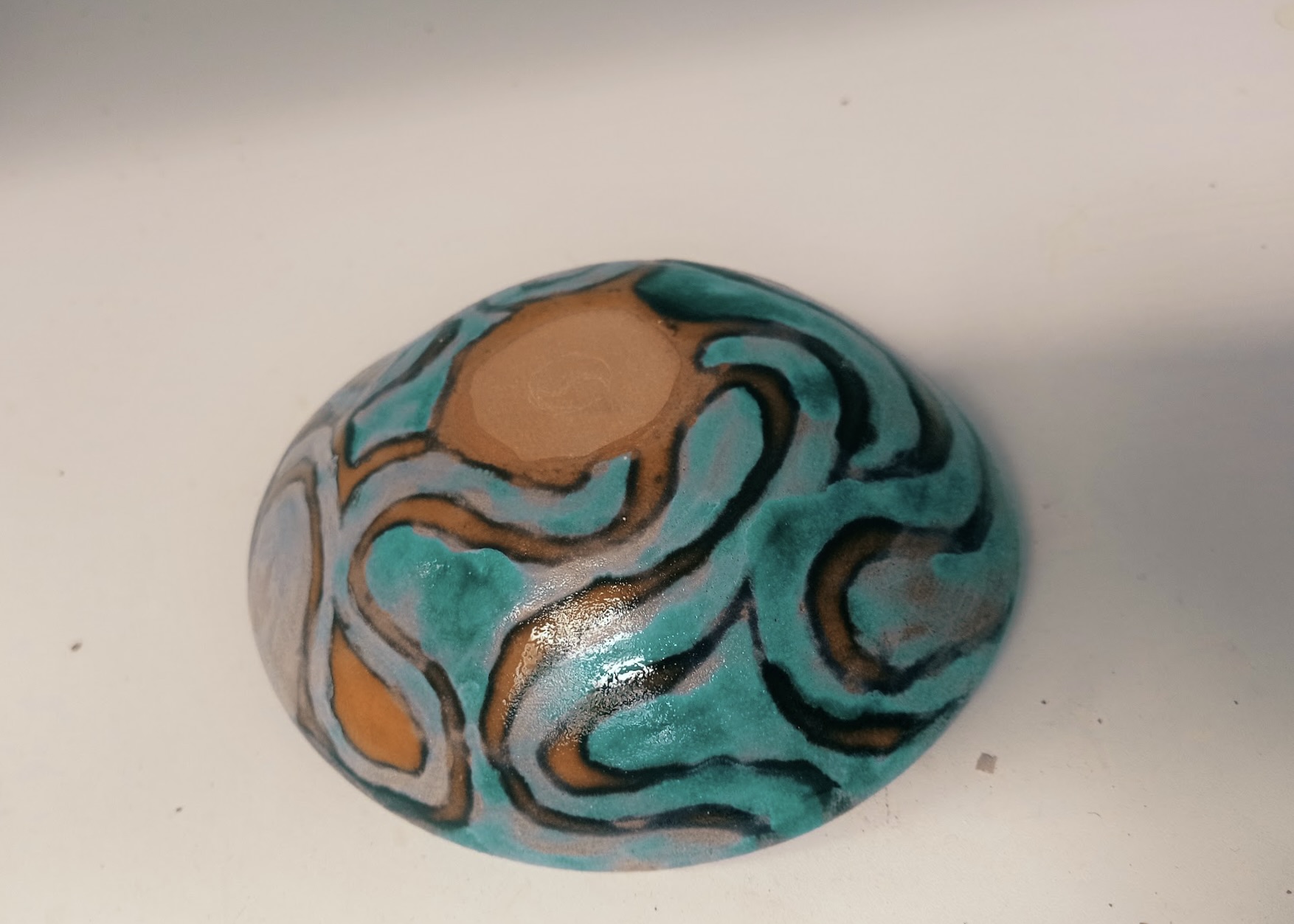
This small-scale piece explores asymmetry and glaze interaction. Working at a reduced size allowed subtle shifts in curve and thickness to become more pronounced, sharpening attention to detail.

Glazed Pottery Series #1.2
Red clay vessel exploring asymmetrical shape and glaze.
This vessel features an inward curve near the rim, creating a sense of containment. The form changes how the object is held and used, emphasizing the relationship between hand, form, and function.

Glazed Pottery Series #1.3
Red clay vessel exploring asymmetrical shape and glaze.
With a wider opening form, this piece feels bigger than it is. The glaze subtly pools near the rim, creating gentle color variation that draws attention to the vessel’s opening.

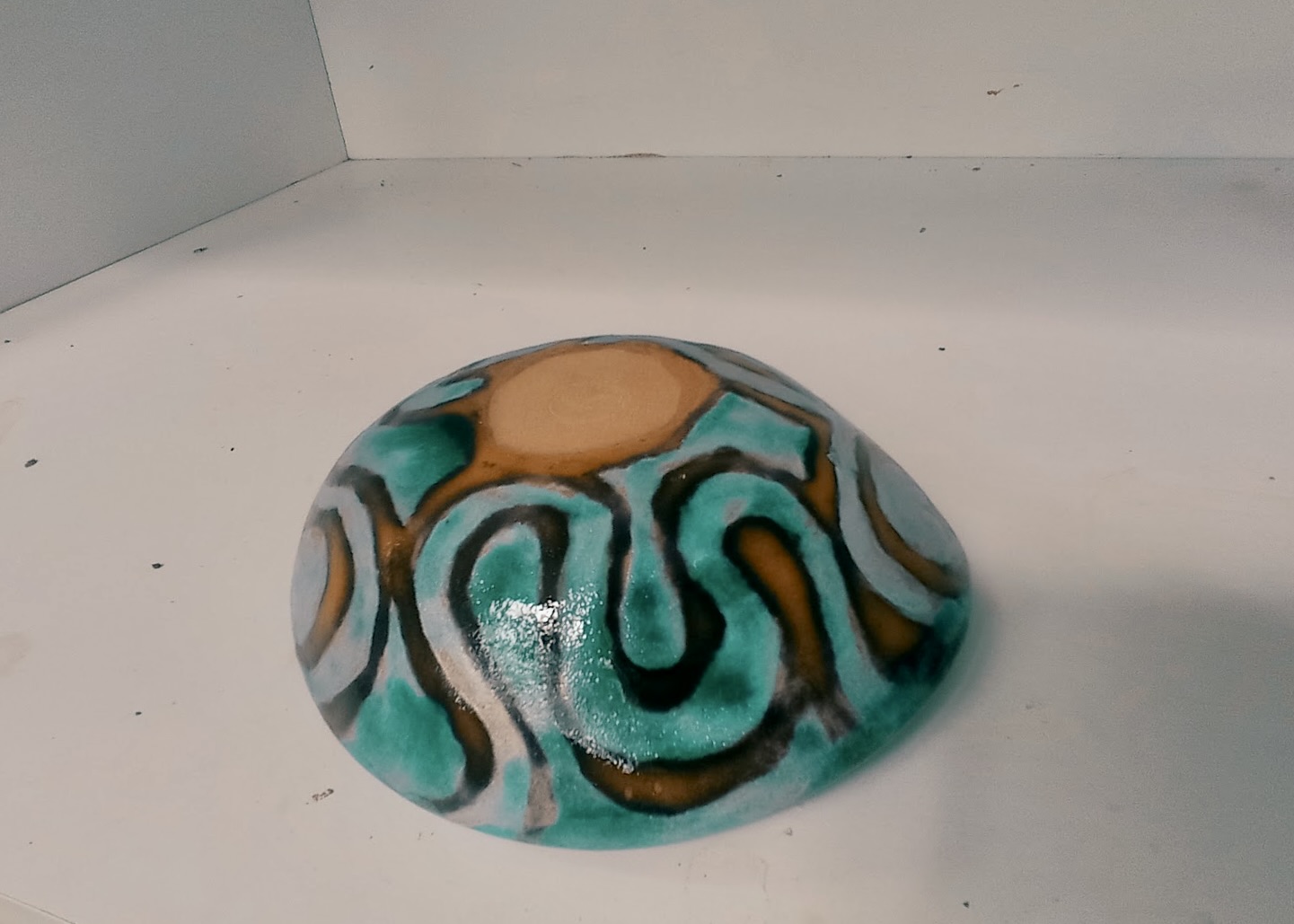
Glazed Pottery Series #2.1
Bowl-shaped red clay vessel exploring glaze variation.
This vessel explores repetition with variation, using a consistent form while allowing glaze differences to give each piece individuality.

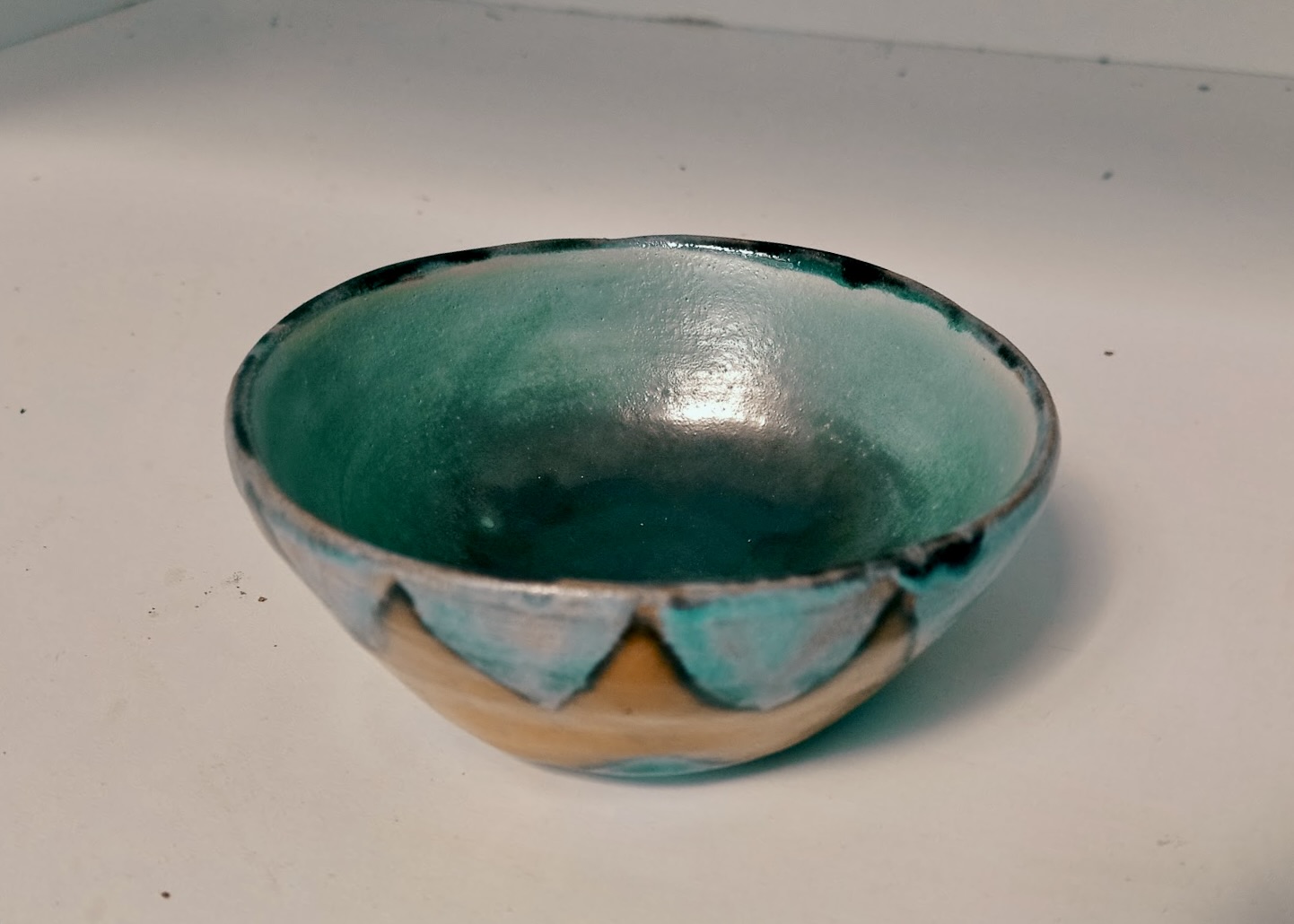
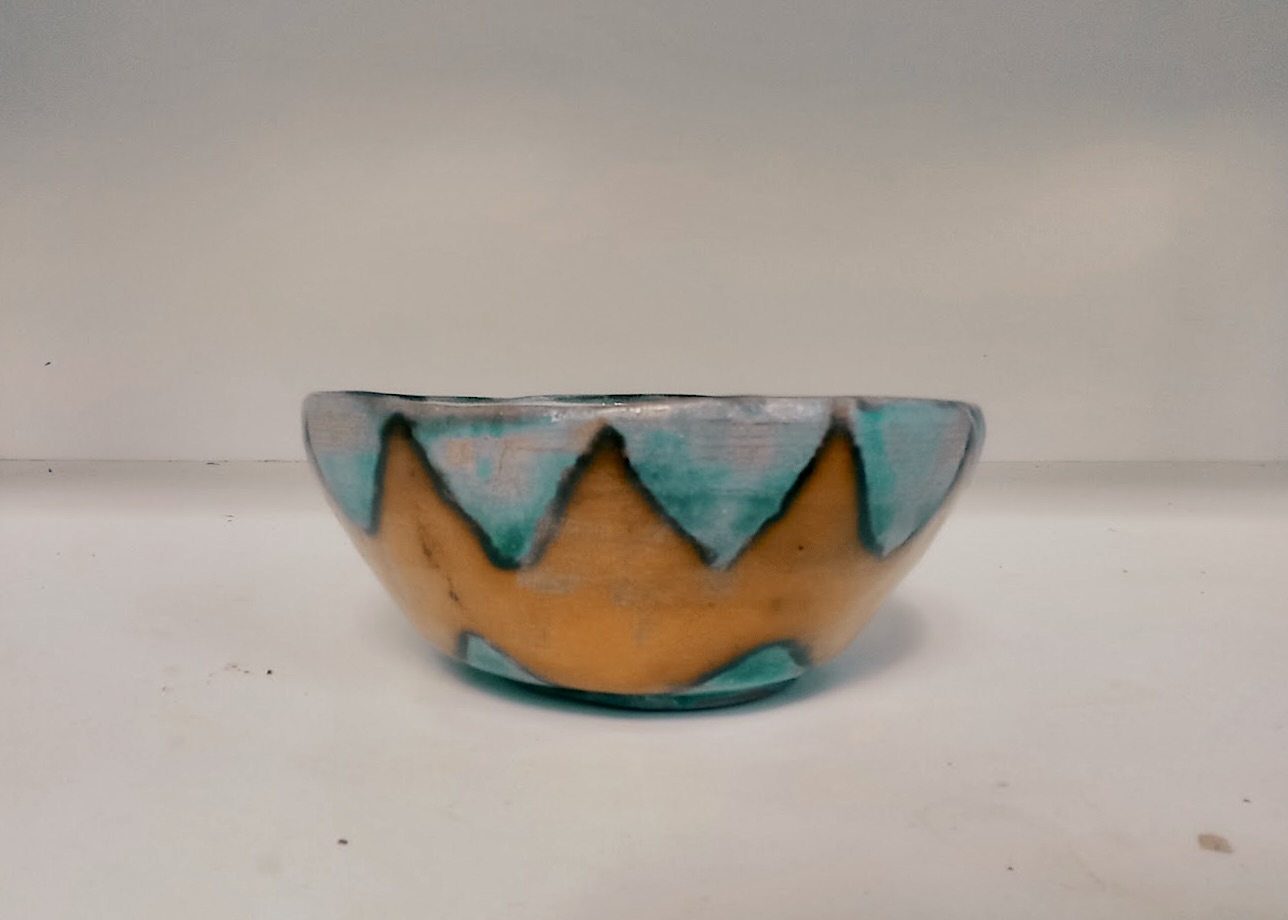
Glazed Pottery Series #2.2
Bowl-shaped red clay vessel exploring glaze variation.
This piece highlights cohesion within a group of vessels. Shared material and glaze create visual unity while allowing individual forms to remain distinct. The triangular glaze design was fitting to the triangular shape of the bowl.

Glazed Pottery Series #3.1
Bowl-shaped red clay vessel with simple glaze.
This work focuses on rhythm and repetition, where similar proportions create a visual pattern when viewed together. The trim glazing was done carefully, as well as the rest of the glazed pottery series.

Glazed Pottery Series #3.2
Bowl-shaped red clay vessel with simple glaze.
This vessel emphasizes familiarity and comfort through a classic, approachable form. The proportions and glaze were chosen to feel warm, functional, and inviting.
Pigment Tiles
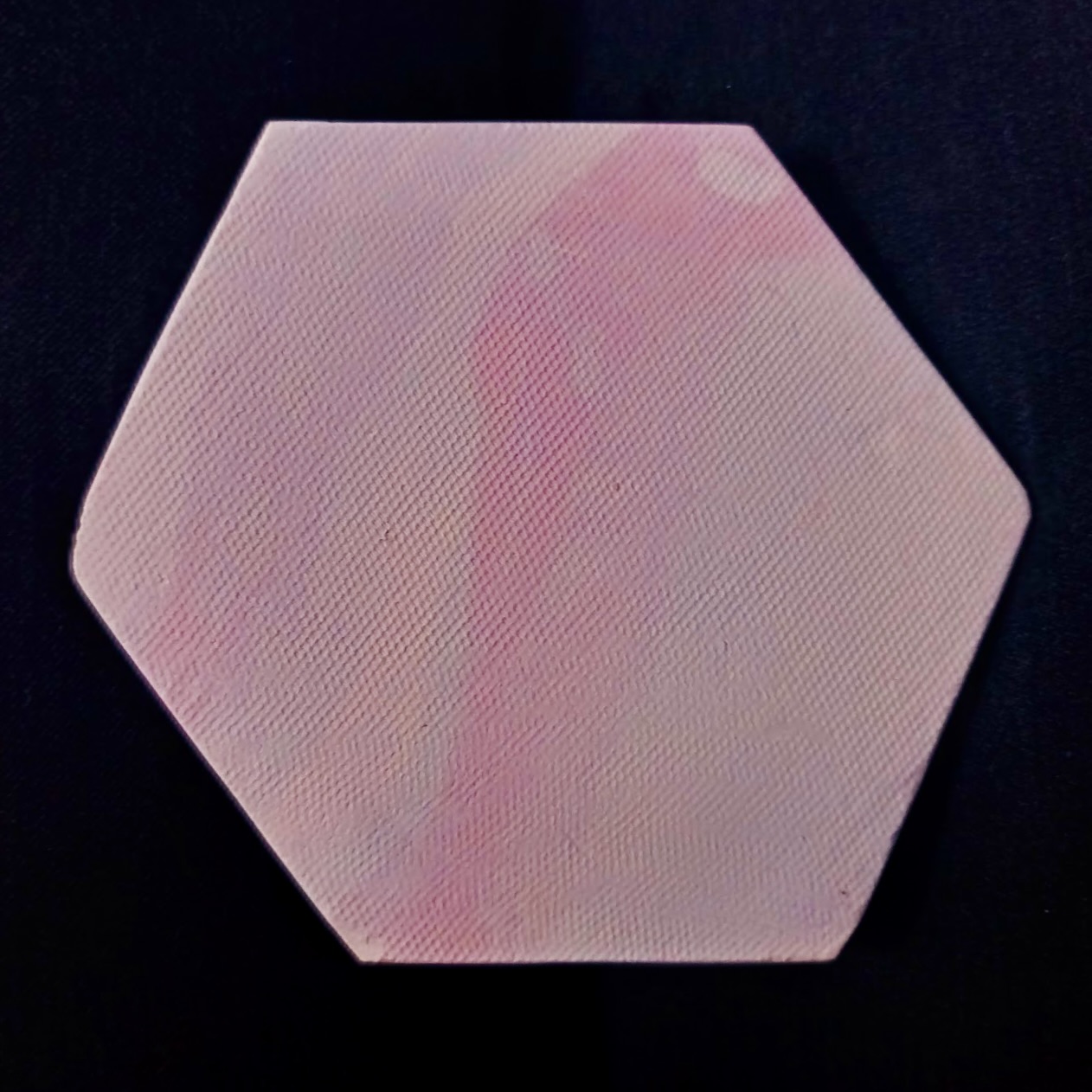
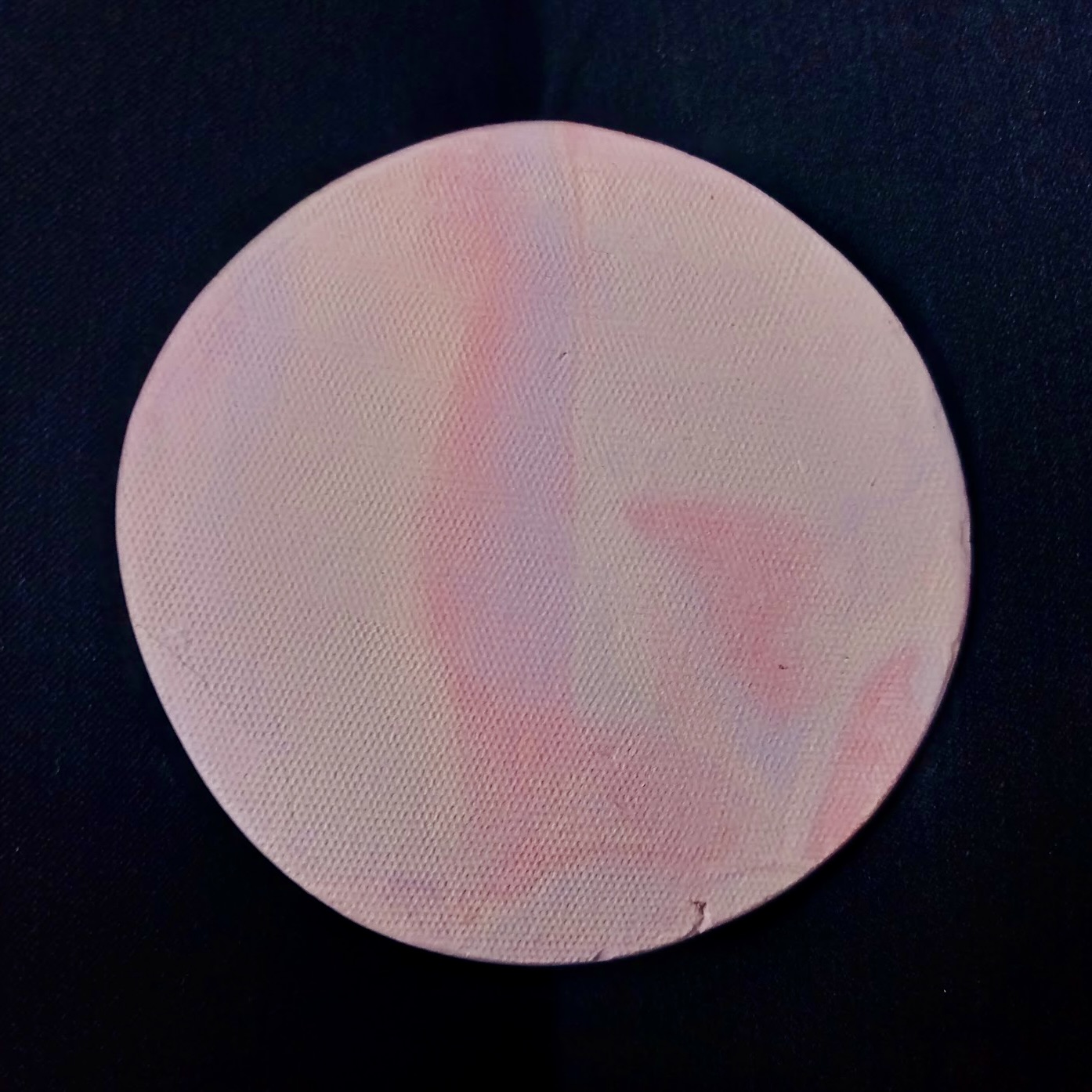
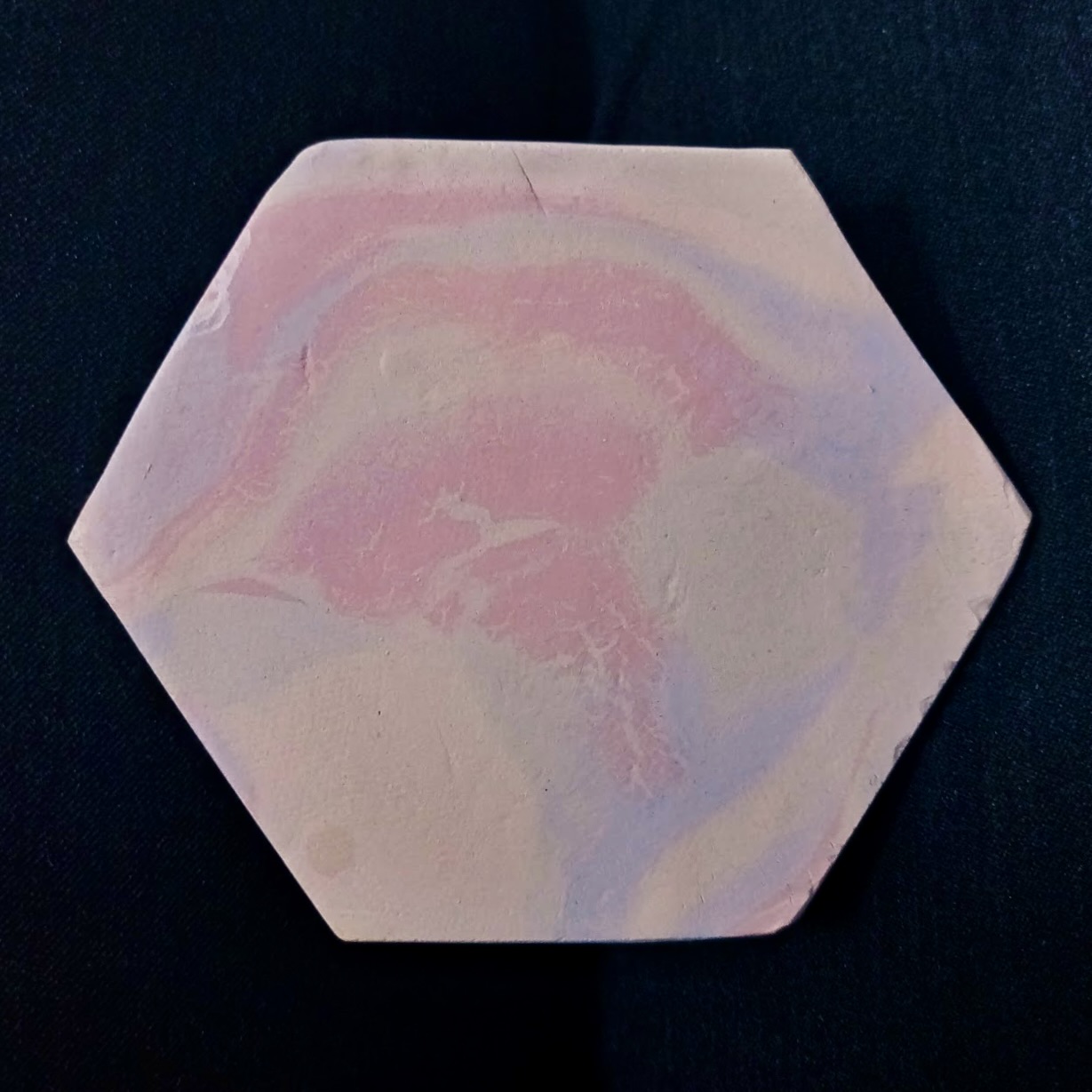
My pigment tile experiments allowed me to focus mainly on surface: layering color, testing underglazes, and carving or pressing patterns into the clay. These tiles became small laboratories for exploring how line, texture, and pigment come together once fired.
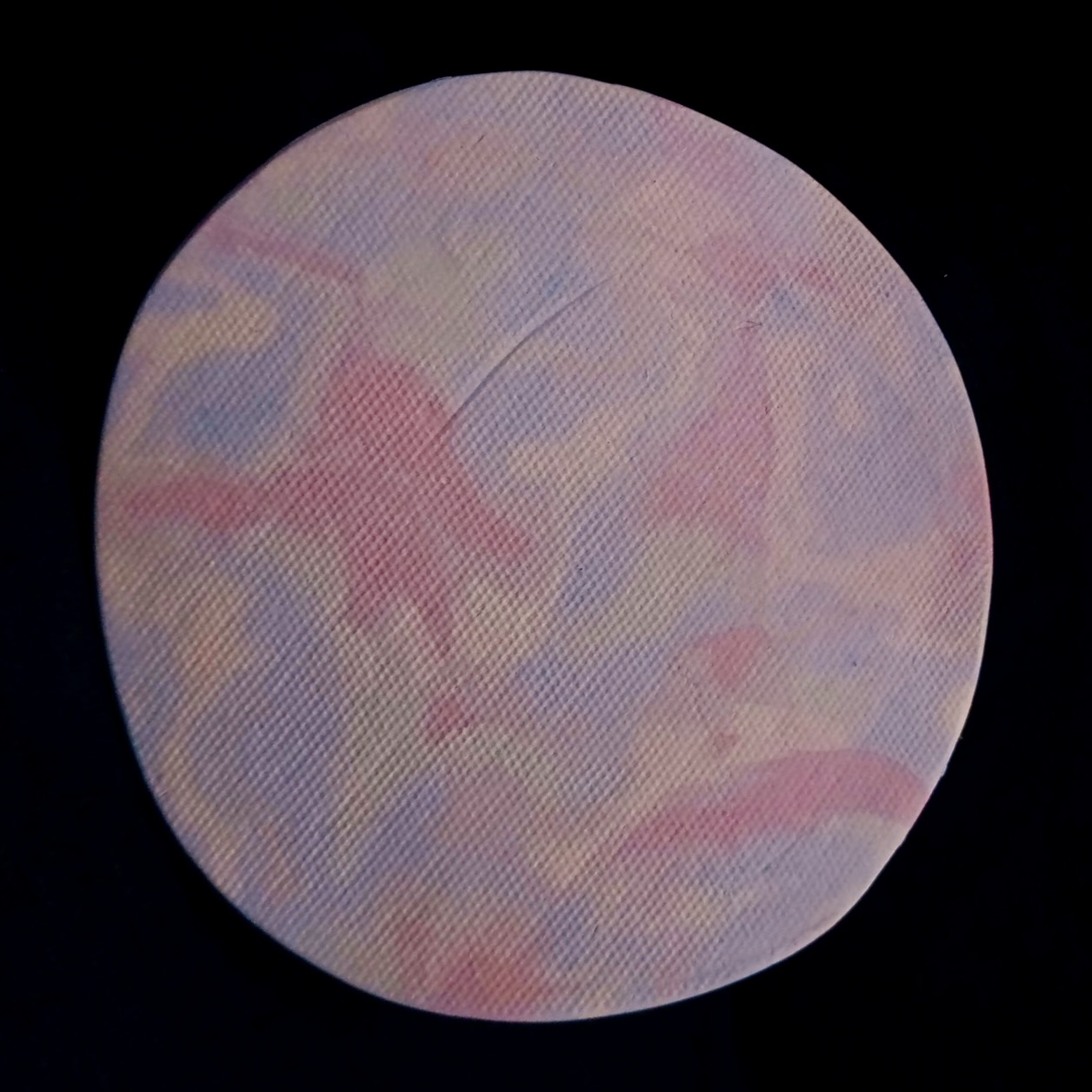
Pigment Tile 1
A ceramic tile exploring basic pigment application and pattern.
This tile was one of my first experiments with layering pigment on a flat surface. I focused on simple shapes and lines to see how the colors would interact after firing and how much detail the surface could hold without feeling crowded.
Pigment Tile 2
A ceramic tile is experimenting with repeated motifs and rhythm.
Tile 2 plays with repetition—using similar shapes arranged in a structured way to create an overall rhythm. The pigments help separate and connect these motifs, guiding the eye across the surface in a deliberate pattern.
Pigment Tile 3
A tile exploring carved lines and filled pigment.
This piece combines carving into the clay with filling those lines using pigment. The contrast between the raised and recessed areas adds a tactile quality to the design, turning the tile into both a visual and physical pattern study.
Pigment Tile 4
A tile focusing on layered color and overlapping shapes.
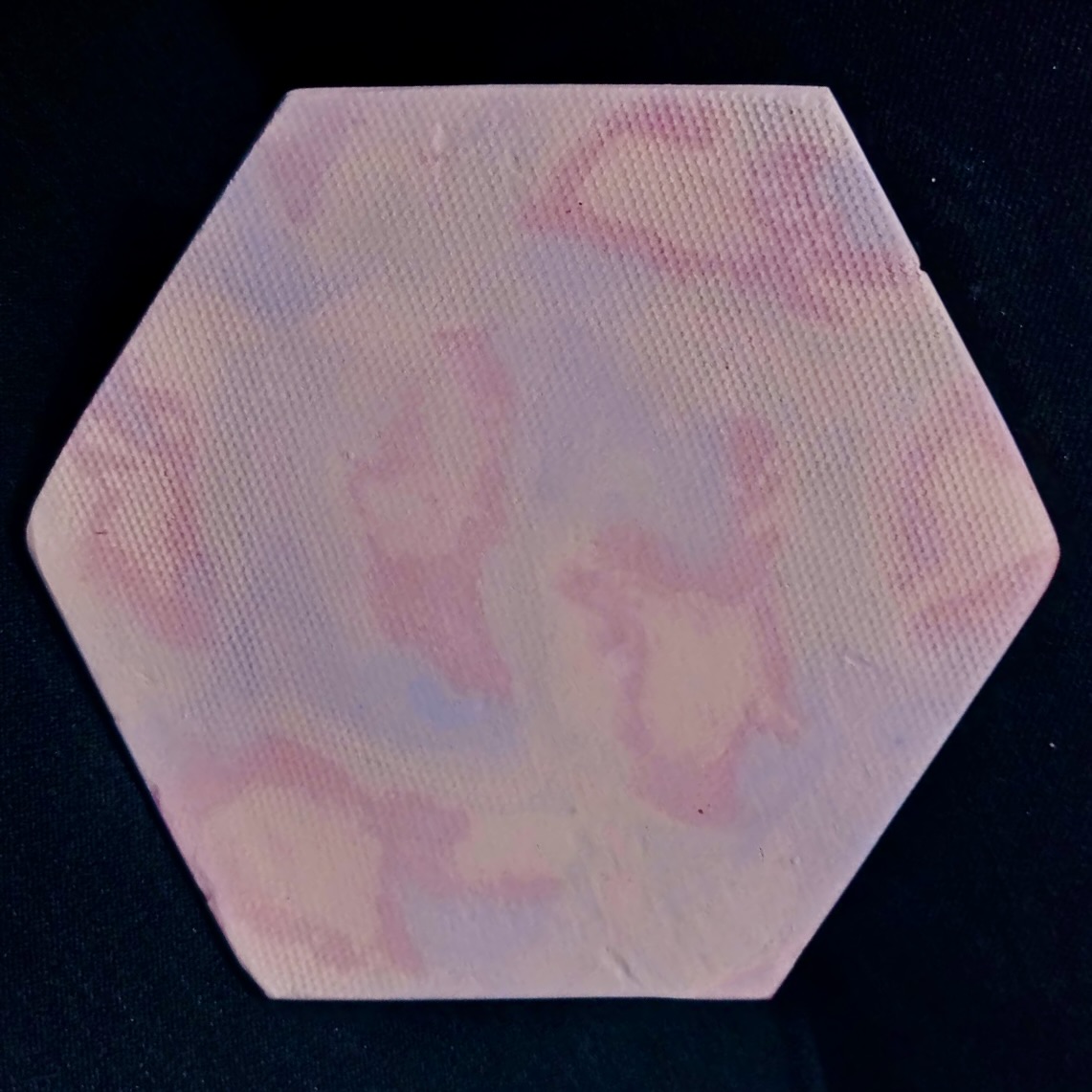
In this tile, I tested what happens when shapes overlap and pigments are applied in more than one layer. The goal was to create a sense of depth on a flat surface, playing with opacity, transparency, and the edges where colors meet.
Pigment Tile 5
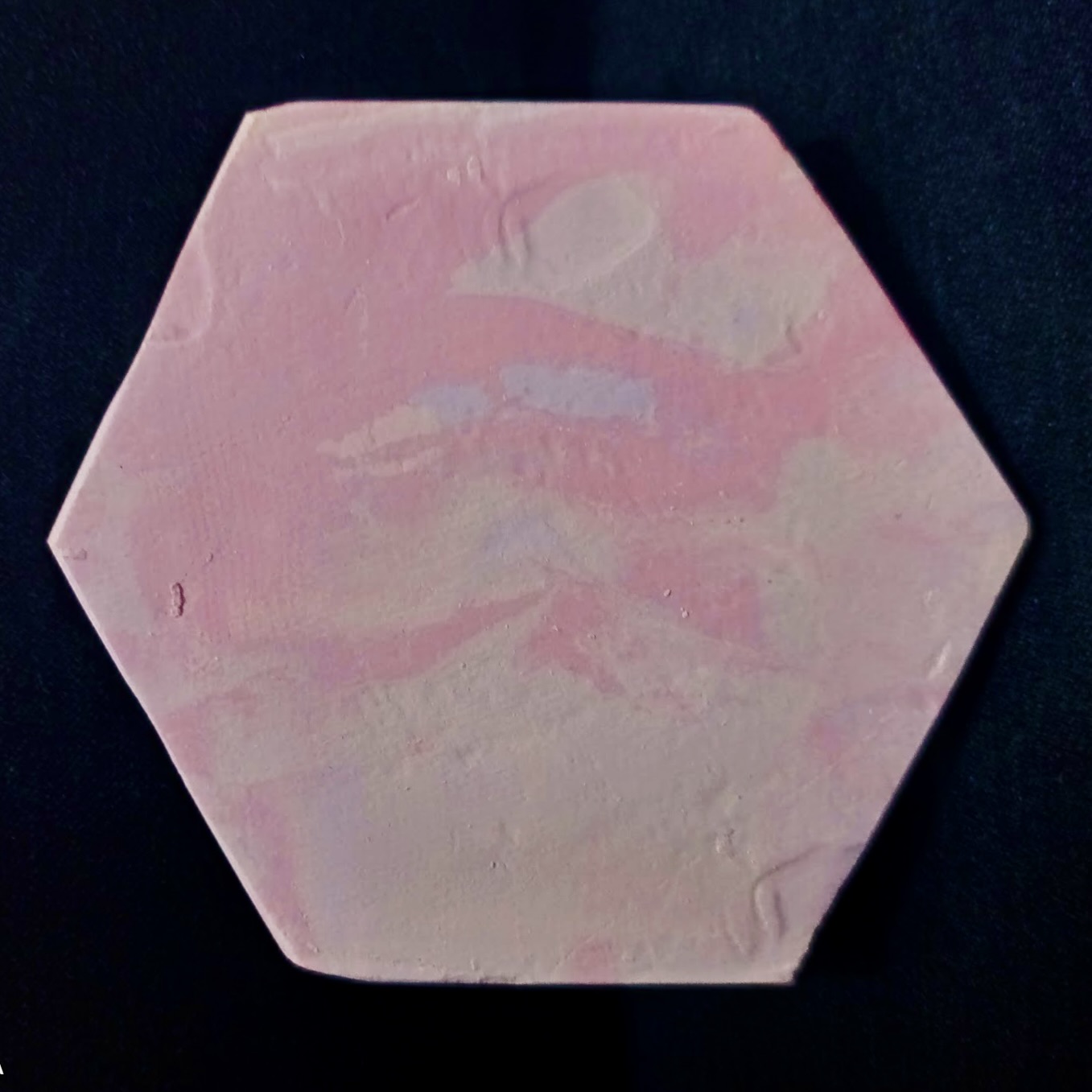
Tile experiments with different pigment combinations and textures.
Tile tests a slightly different approach to pigment and texture, but they share a common language of color and mark-making, making them feel like variations within the same theme.
Pigment Tile 6
A final pigment tile bringing together pattern, carving, and layered color.
This tile combines many of the techniques I experimented with earlier—carved lines, repeated shapes, and layered pigments. It represents a more confident use of the surface, treating the tile as both a test piece and a finished artwork on its own.